College of Arts, Sciences and Letters first-year student Natalie Vitale looks out a second-floor window of a 1919 Arts and Crafts home in Detroit during a class field trip. Today there’s a nice-sized yard and a few trees. However, the home’s previous residents had a view from that same window that was far less peaceful: They saw an angry mob.
The East Village home is where a landmark trial in U.S. civil rights history originated — and it’s less than 20 miles from UM-Dearborn. Ossian Sweet, an African American doctor, defended his Detroit home from a violent white crowd in 1925. The court case that followed set a legal precedent that citizens, regardless of skin color, have the right to protect their home from danger.
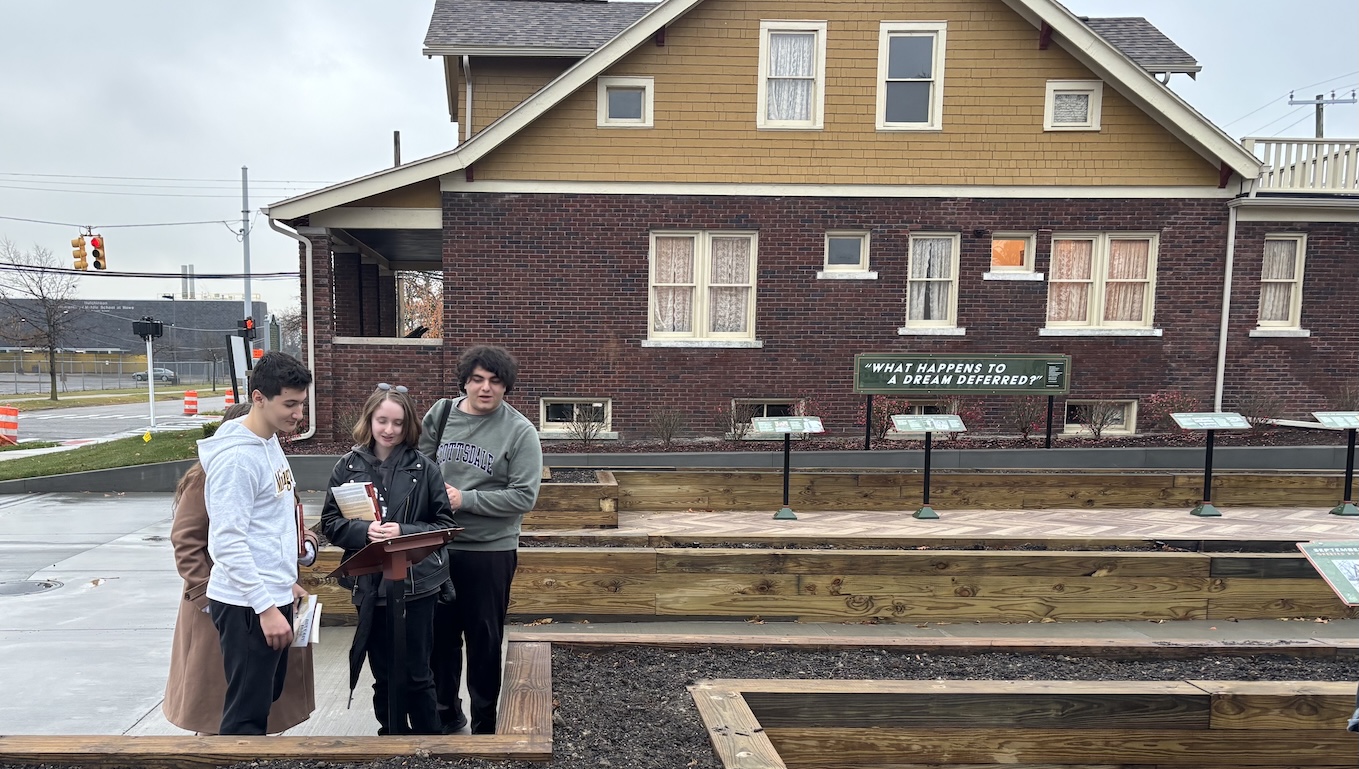
“It was hard to fathom what Dr. Sweet and his family experienced,” says Vitale, who visited the Ossian Sweet House museum during an elective field trip offered through a Fall 2025 Honors course called Four Trials. Featuring stained-glass windows and a distinctive red-brick front porch, the Ossian Sweet home opened for tours by appointment starting in fall 2025. Professor of Composition and Rhetoric Liz Rohan, who teaches the Four Trials course and highlights Dr. Sweet’s case, took a group of her students during Thanksgiving break to visit the site.
To organize the tour, Rohan worked with Daniel Baxter, founder and CEO of the Ossian H. Sweet Foundation. Baxter’s parents bought the home from Dr. Sweet in 1958 and Baxter owns it today. “It’s an honor to share the story of Dr. Sweet in the very home where history was made. The lessons of courage, justice and community still speak loudly today,” says Baxter, explaining why it was important for him to open the home to the community. “It’s inspiring to see people connect with Dr. Sweet’s story in such a meaningful way. ” Baxter and Rohan are exploring course partnership opportunities for the future.
In Four Trials, which is a required Honors Program course that runs each fall semester, students learn and write about landmark legal cases to help them connect past legal arguments and decisions to today. There are multiple sections of the course and Rohan is one of the professors who teach it. “To learn from our country’s history, it’s important for us to explore the events of the past and to bring them to life in a profound way when we can,” says Rohan, whose research explores America’s Progressive Era with a focus on 1920s Detroit. In addition to Sweet’s case, Rohan and her Fall 2025 class examined the 1911 Triangle Shirtwaist Factory fire and subsequent workplace reforms, the 1965 murder of Civil Rights Viola Liuzzo and the first Civil Rights Movement-era conviction of Ku Klux Klan members, and the 1901 acquittal of Margaret Hossack and the country’s shifting views on women’s rights.