Students translate the past for future benefit

October 27, 2025

Arabic Translation Certificate students are growing a professional skill while helping bring an Arab American National Museum collection about life in pre-1948 Palestine to an English-speaking audience.

UM-Dearborn student-translators, from left, Reena Hamad, Laila Aljundi, Jerees Afnan and Mohamad Amir, are learning more about life in Jimzu, Palestine, through an Arab American National Museum collection.
UM-Dearborn student-translators, from left, Reena Hamad, Laila Aljundi, Jerees Afnan and Mohamad Amir, are learning more about life in Jimzu, Palestine, through an Arab American National Museum collection. Photo by Sarah Tuxbury

On a recent morning, UM-Dearborn student-translators gathered around papers in the Arab American National Museum. There were yellowed manuscript pages written in pencil and a hand-drawn detailed map of Jimzu, Palestine. The map of the village had green branches to mark the location of olive trees and sketched boxes to show, by name, where residents lived. These works are how Palestinian American Ahmad Ibrahim, who lived in Jimzu from his birth in 1922 until 1948, memorialized his hometown.

These students, who are all multilingual, spent part of the last academic year — some during the winter semester and others over the summer — translating Ibrahim’s pages and map from Arabic to English. Their goal: To help this AANM collection reach more people in the community by having it available in two languages. Led by UM-Dearborn’s Center for Arab American Studies Director Wessam Elmeligi, 10 students have performed translation work through a four-credit Arabic Translation Skills course that’s part of the university's Arabic Translation Certificate program

“My family name, Aljundi, is included on the map as the name of a resident in Jimzu,” exclaimed Laila Aljundi, while she stood over the table during an October student-translator reunion at the museum. “I need to share this with my parents.” The sophomore is a Detroit resident from Syria, which is near Palestine.

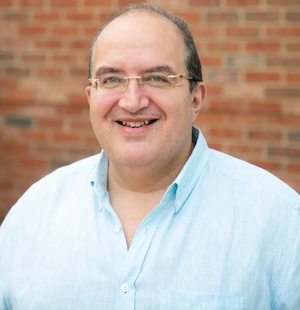
Photo of a man in a blue shirt with a brick wall in the background
CAAS Director Wessam Elmeligi

Through the course, which is styled like an internship, Elmeligi said students translated Ibrahim’s pages and sketches to preserve the memory of Jimzu, which was depopulated through force by Zionist paramilitary troops in 1948. It was subsequently destroyed by the state of Israel. Jimzu, which had a population of more than 1,500 in 1945, was an ancient city mentioned in the Bible. “It existed through the Romans, through the Philistines, through the Islamic Age,” said Jerees Afnan, a 2025 graduate who did this translation work as a UM-Dearborn student in winter 2025. “It’s a privilege to read Ahmad’s documents about Jimzu and translate them.”

AANM Research and Content Manager Kyle Wynter-Stoner said Ibrahim’s works are a highly valued part of the museum’s collection. He said it’s important to share personal stories from Arab Americans about Palestinian life before 1947’s United Nations Partition Plan for Palestine, which sought to divide the territory into a Jewish state and an Arab state and led to many civil wars. With the war in Gaza, Wynter-Stoner looked through the archive and selected collections to highlight. Ibrahim’s was one of those.

“These students are doing very important work in helping us translate his manuscript, which is written like a diary. Ahmad was removed from Jimzu, along with his pregnant wife and everyone in the village, by Zionist paramilitary forces. He lived in a refugee camp in the West Bank before emigrating to the U.S. in 1956,” Wynter-Stoner said. “When Ahmad went back to visit the location of Jimzu in the year 2000, he saw it was leveled. Nothing was as he remembered it. It was just flat land.” Wynter-Stoner does not know exactly when Ibrahim started or finished the manuscript, but entries appear to be in response to that 2000 visit. Ibrahim, who settled in Brooklyn and had a successful life there, died in New Jersey in 2008. His family donated the collection to the museum. 

Reading Ibrahim’s texts, students learned about Jimzu’s village life, daily interactions between neighbors and cultural traditions. Aljundi said a memorable entry is when Ibrahim discussed how the neighbors would all bring pots of food to share in celebration of a wedding, as a way to honor the new couple. “It felt like I was sitting with an older gentleman telling me a story about his life,” she said. “When I read his words, I felt like a window to the past was opened to me.” 

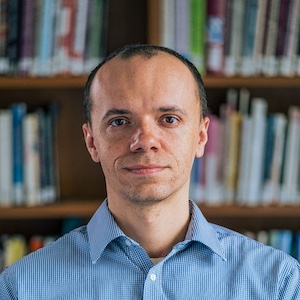
A photo of a man in a  blue shirt looking forward. He is in front of a book shelf
AANM Research and Content Manager Kyle Wynter-Stoner

As much as the student-translators enjoyed the work, there were challenges due to the handwritten nature of the entries. “There is a line in the musical ‘Hamilton’ that says, ‘Why are you writing like you are running out of time?’,” said Afnan, who is a Plymouth resident from Jordan. “Ahmad’s writings reminded me of that line,” he added. “You can see that he’s writing quickly and trying to get everything down. I understand why. When I mentioned the work I was doing to my Palestinian friend who lives in Jordan, he never heard of Jimzu. Of course, older generations who live in Palestine and those who have migrated likely remember it and have passed stories to their kids and grandkids. However, as time passes, there may be a time where it all becomes forgotten. Thinking about that has helped me see the importance of the work we are doing. We're not just translating words; we’re helping preserve and share stories that deserve to be remembered.”

Elmeligi, an associate professor of Arabic studies and comparative literature, said the translation project was developed through the university’s long-standing partnership with the AANM. Elmeligi wanted to give students practical experience, while also assisting the first and only museum in the U.S. devoted to documenting and sharing Arab American contributions.

“We have very talented students at UM-Dearborn and I approached the museum. Working with Kyle, we came up with the idea for translating something that had not been translated before,” Elmeligi said. “This professional-level translation work is a way to show our students and their families how the humanities can offer more than cultural enrichment. You can learn a lot about the world through the humanities, which is valuable in itself — but you can also apply what you learn in a career.” Students were paid for their translation work through an Office of Community Engaged Learning Seed grant. In the future, the program will be supported through the Holly Maguigan and Abdeen M. Jabara Scholarship Fund.

The year’s completed translations were reviewed by Elmeligi and recently shared with the museum. Ibrahim’s manuscript, which is long, will continue to be translated by students who take the course in the future. 

Wynter-Stoner is impressed with the dedication of Elmeligi’s students. At first, he planned to translate Ibrahim’s manuscript on his own because he knew the importance of what was on the pages. But now, he has help getting Ibrahim’s words out.

“These students are helping increase the accessibility and searchability of the museum's contents for future researchers and community members,” Wynter-Stoner said. “The work they have done helps us to continue to share stories like Ahmad’s well into the future. This work is helping us keep the past and our history alive.”

Story by Sarah Tuxbury