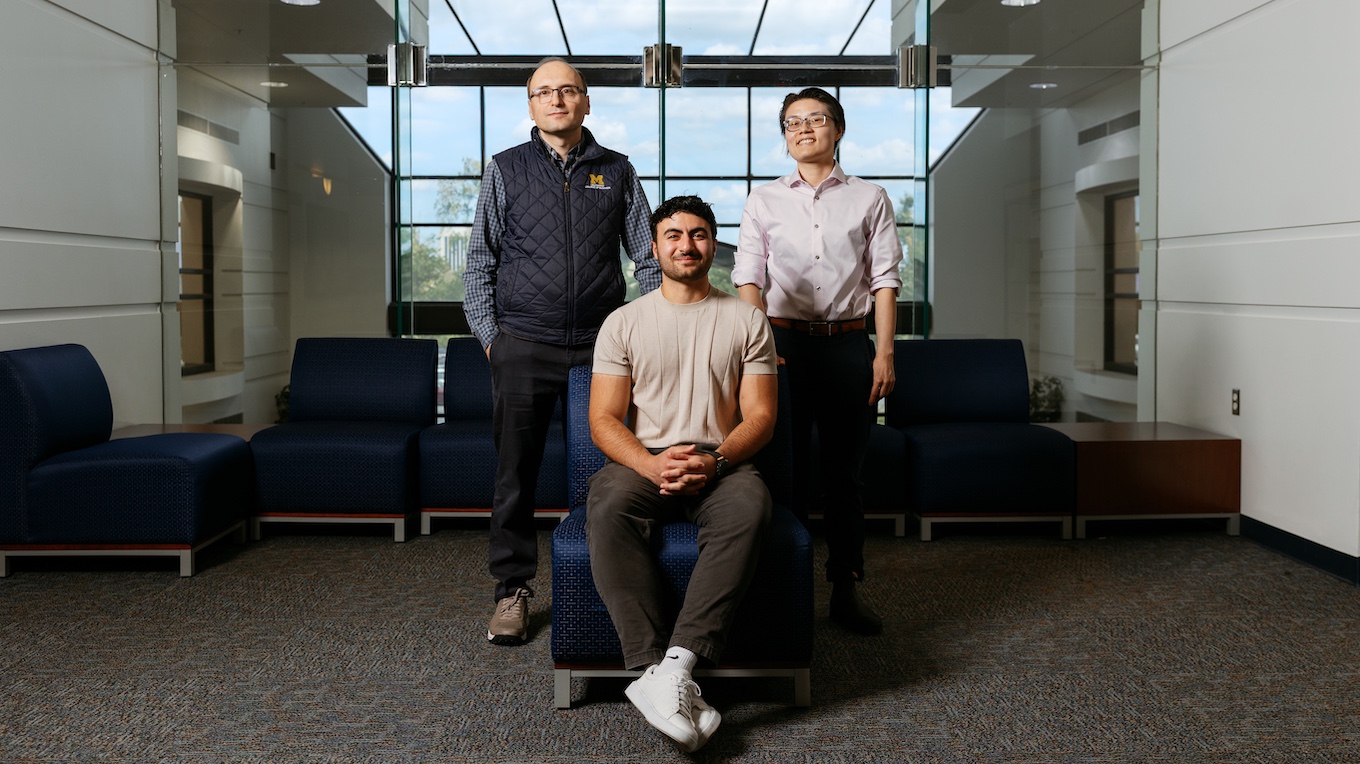
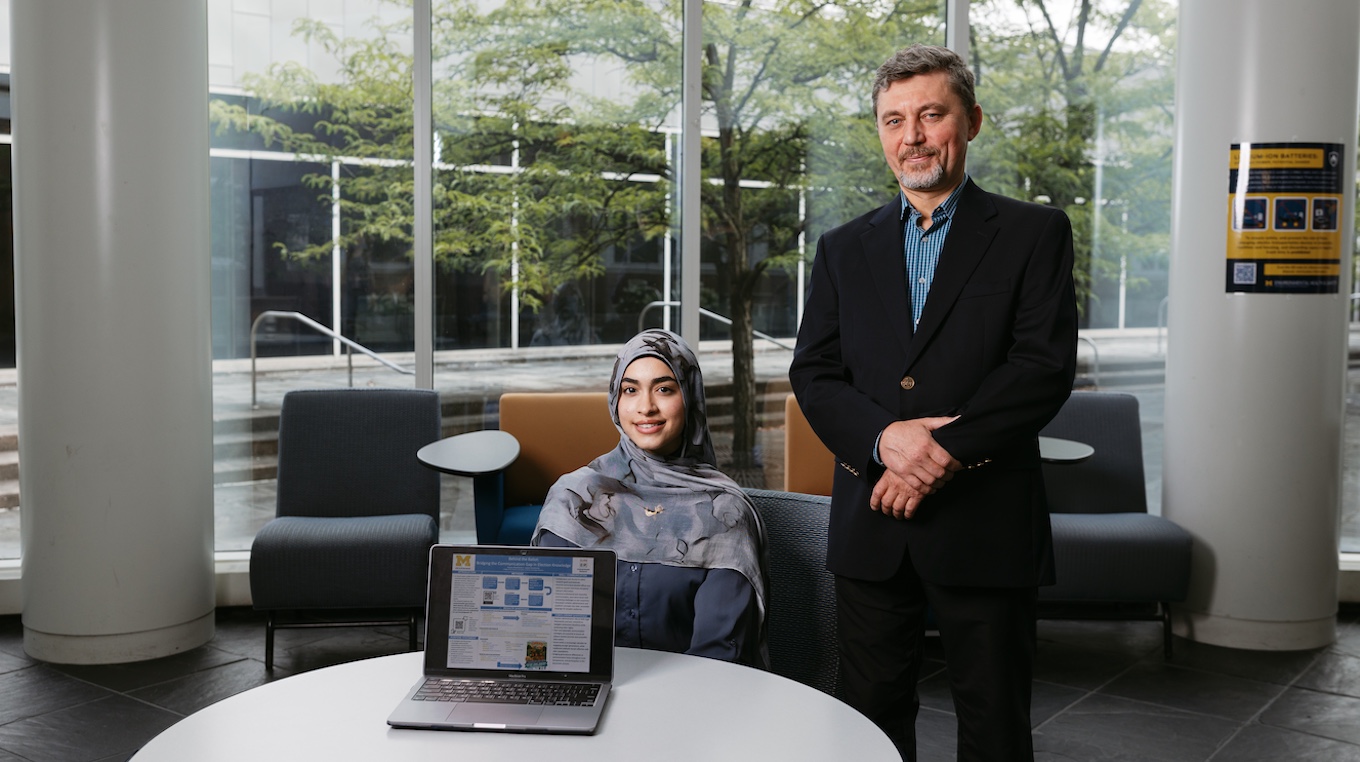
Pyrozhenko and junior Amany Alhashidi are looking into “uncommon situations” and what local governments are doing to educate their citizens when those arise. “The contribution of this research is that we look at the importance of communicating to the citizens and sharing knowledge about election administration processes,” Pyrozhenko says. “Since I teach people going into public administration, I wanted to understand how administrators — in particular, city clerks — handle the elections process and articulate their knowledge to others.” City clerks are a vital liaison between city government and the public, Pyrozhenko points out. They manage elections, facilitate communication, ensure transparency through access to public records, and connect citizens with their elected officials and municipal services.
As a general framework, public administration is grounded in regulations and rules, but those aren’t able to capture all the situations that the employees encounter, says Alhashidi, a biological sciences major. The researchers wanted to know: What happens when something falls outside of standard routine procedures?
For the SURE project, Alhashidi conducted interviews with several city clerks throughout southeast Michigan to learn more about how they handle elections. She developed three main interview prompts. She asked the clerks to tell her about uncommon situations they’ve encountered, whether they reached out to other city clerks to discuss uncommon situations in an effort to streamline knowledge, and how they communicated that knowledge to the general public.
From the interviews, the research duo is compiling a list of uncommon situations — like the ballot paper swelling — and the ways city clerks navigated them. They plan to publish their findings in an effort to help bridge knowledge gaps regarding elections. “Elections are complex. There will always be somewhat of a knowledge gap because election policies and technology change, but we can try to lessen it through sharing knowledge. It’s important to talk to our city clerks to learn what they are seeing and experiencing,” Pyrozhenko says. “They have an expertise that most people don’t.”
When Alhashidi interviewed the clerks — most interviews took place in person — she gained insight into the different communication styles of each city clerk’s office depending on staff resources and the communication preferences of their residents. For example, cities with a younger-aged population placed more focus on online outreach. Many city clerks utilized a combination of outreach efforts to get information out to residents. They hosted community question-and-answer sessions at public libraries, responded to posts on social media and sent out newsletters and postcards. The cities with minimal resources had the city clerk handling all of the citizen communication efforts by themselves. Alhashidi also discovered that city clerks often pool their knowledge and ask each other about uncommon situations through digital tools like private online platforms and specialized software, by reaching out to professional association contacts or through contracting neighboring city clerk offices. Even though the SURE program has concluded for the year, Alhashidi and Pyrozhenko will continue with their research by conducting additional interviews to gather more information.
Alhashidi, who plans to be a dentist, discovered the research opportunity by looking through a list of available SURE projects. She currently works as a dental assistant and sees connections between this project and the work she does. “All fields have uncommon situations,” she says. “The medical field is very formalized, like working in a government office. There are medical protocols to follow and we learn those in the classroom and in books, but every patient is different, so uncommon situations come up. When they do, this research is giving me insight on how to communicate clearly with my coworkers and patients.”
Alhashidi, like many people, has heard concerns about election tampering and saw social media posts about government conspiracies. But after working on the research, she feels confident in answering the question in the project title, “What is the government hiding?”
“There was no evidence of hidden information. Our research shows the government employees in southeastern Michigan are working very hard to get information out to educate the public while also combating misinformation. They are doing a lot with very little resources because they are mindful of taxpayer dollars,” she says. “If you have questions for them, reach out to ask. If you are concerned about the election process, volunteer to help work at the polls. That way you can see the process yourself while also helping your community.”
Check out a few more articles about projects focused on treatments for renal cancer (CASL), the impacts of the Affordable Care Act on health care disparities (College of Education, Health and Human Services) and solutions to AI programming challenges (College of Engineering and Computer Science).
Story by Sarah Tuxbury