New class expands views through Ways of Seeing

November 17, 2025

An interdisciplinary class pulls in experts from engineering, arts, sciences, business and more to share lessons about intellectual empathy and holistic thinking.

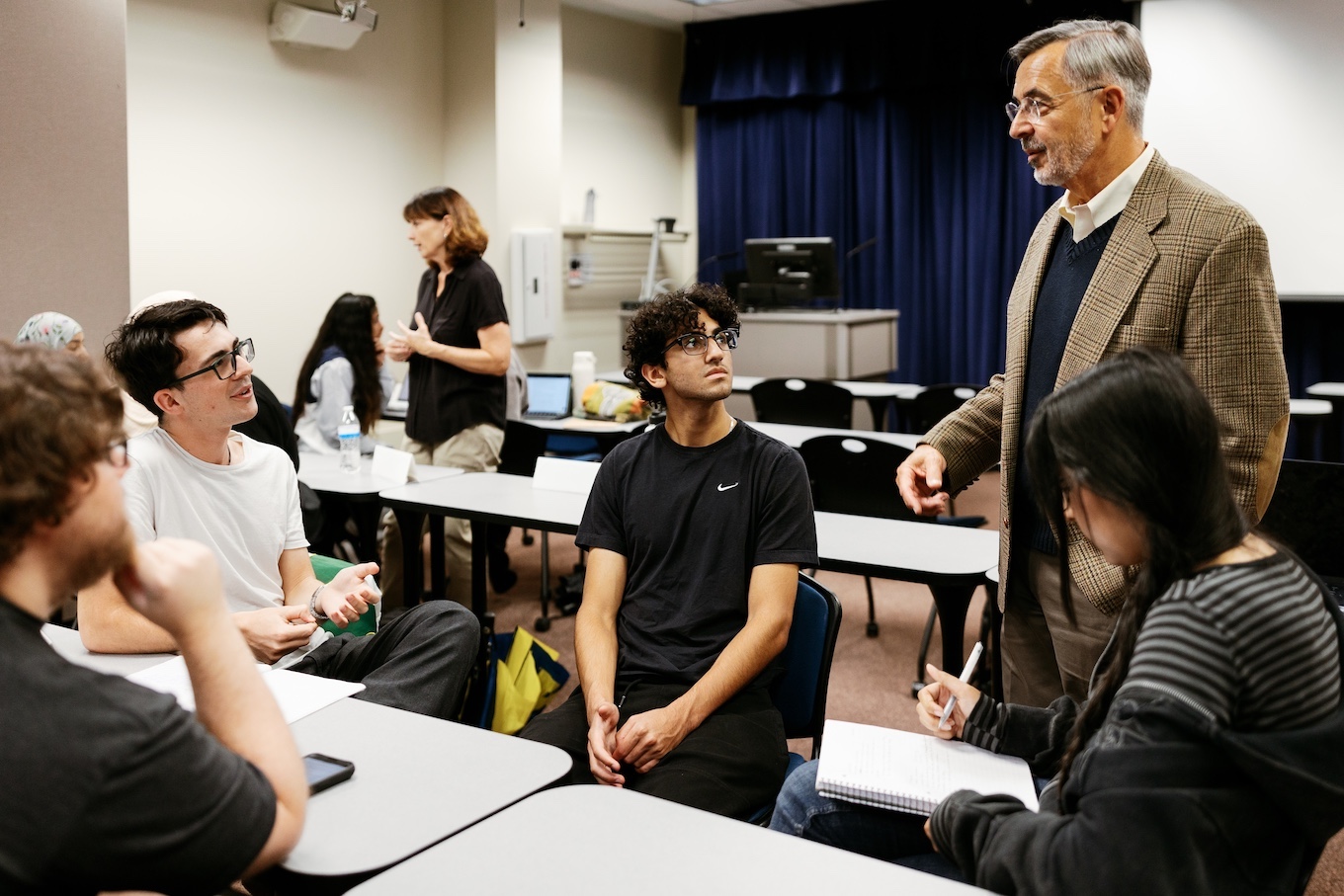
U-M President Domenico Grasso, right, speaks with students in the Ways of Seeing Honors course at UM-Dearborn. Grasso and Professor of Psychology Marie Waung are co-teaching the Wednesday class.
U-M President Domenico Grasso, right, spoke with students, clockwise from left, Ishita Desai, Jameela Aossey and Jenna Jamgochian about the importance of incorporating disciplines, like the liberal arts, into engineering during a recent Wednesday class.

To solve complex problems, people with different perspectives need to be brought to the table — or, in the case of a new Honors course at UM-Dearborn, into the classroom.

“I look forward to this class every week,” said sophomore Jameela Aossey, as she set her green-framed tablet and pastel Owala water bottle down at her desk space. “It reminds me that if we stopped to think about what other people experienced before we acted, the world would be a better place.”

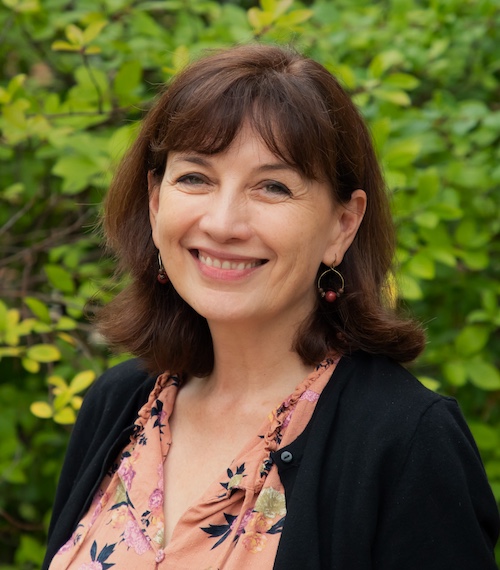
Marie Waung
Professor of Psychology Marie Waung

Ways of Seeing: Diversity of Thought and Intellectual Empathy is designed to help students do exactly that. It’s a long course title that hopes to have an even longer impact. Co-taught by Professor of Psychology Marie Waung and U-M President, environmental engineer and former UM-Dearborn Chancellor Domenico Grasso, the course encourages the practice of putting yourself in someone else’s shoes. It is built around discussions about intellectual empathy that Waung and Grasso had with UM-Dearborn Professor of Philosophy Maureen Linker, who wrote the book “Intellectual Empathy: Critical Thinking for Social Justice” (University of Michigan Press, 2015). Students read chapters of Linker’s book for the class.

“The course is designed to promote critical thinking that transcends the lessons of a declared major or personal experience,” Waung said. “It’s all about getting people to reflect on how they see the world and how others see the world so we can become more empathetic and flexible in our thinking.”

Every Wednesday morning, students majoring in accounting, history, engineering, public health and other fields gather to discuss a variety of topics with experts from fields such as art, artificial intelligence, primate research, engineering and philosophy. Lively class discussions — led by the professors and guest lecturers — include topics like the future with AI, the importance of evaluating environmental impacts when making decisions in the name of progress, and the implications of social media on people’s attention spans.

A group of seated students speak to a male professor in a beige suit in a classroom.
Grasso, right, and Waung, standing in the background, co-teach the Ways of Seeing course.

During an October session, Waung played a video to illustrate how divided attention can impact perception. Students were asked to count basketball passes by people in white t-shirts. After the students reached the correct answer, Waung asked, “But did you see the gorilla in the video?” Some students said yes, while others were surprised. Waung rewound the video to reveal a person in a gorilla costume standing in the middle of the group. “Our attention is imperfect so that we may miss significant parts of the picture. Just because you didn’t see an event doesn’t mean it didn’t happen or wasn’t part of someone else’s experience. That’s why it’s essential to understand the limitations of our own attention and remain open to other perspectives,” she said. Waung emphasized that recognizing blind spots helps people realize that their experience may not be universal.

In another class, a panel of engineering faculty members discussed how their experiences shape their worldviews. It built upon an earlier lecture by Grasso, where he addressed holistic approaches to engineering. All panelists agreed that diverse lessons and perspectives are essential for great engineers. “Holistic engineering is a mindset that extends beyond technology alone. It approaches engineering as an interconnected system of systems that integrates insights from the humanities, social sciences and the arts with mathematics and science to most effectively understand and respond to real-world problems,” Grasso said. “This approach incorporates human context, ethical awareness, cultural understanding and long-term social impact into the design and decision-making process.”

The panelists discussed why recognizing blind spots matters in engineering. Associate Professor of Mechanical Engineering Amanda Esquivel shared how male engineers designed the first crash test dummies in the 1970s. Today, research shows women sustain more injuries in car crashes because dummies were modeled on the average man’s body. With more women working in engineering fields, the focus is shifting toward more inclusive design in crash test safety, Esquivel told the class. The example had an impact on Aossey. “I’m glad crash testing was invented, but imagine how much better it would have been if the people who invented it were more inclusive at the beginning,” she said. “There’d have been fewer injuries and more lives saved.”

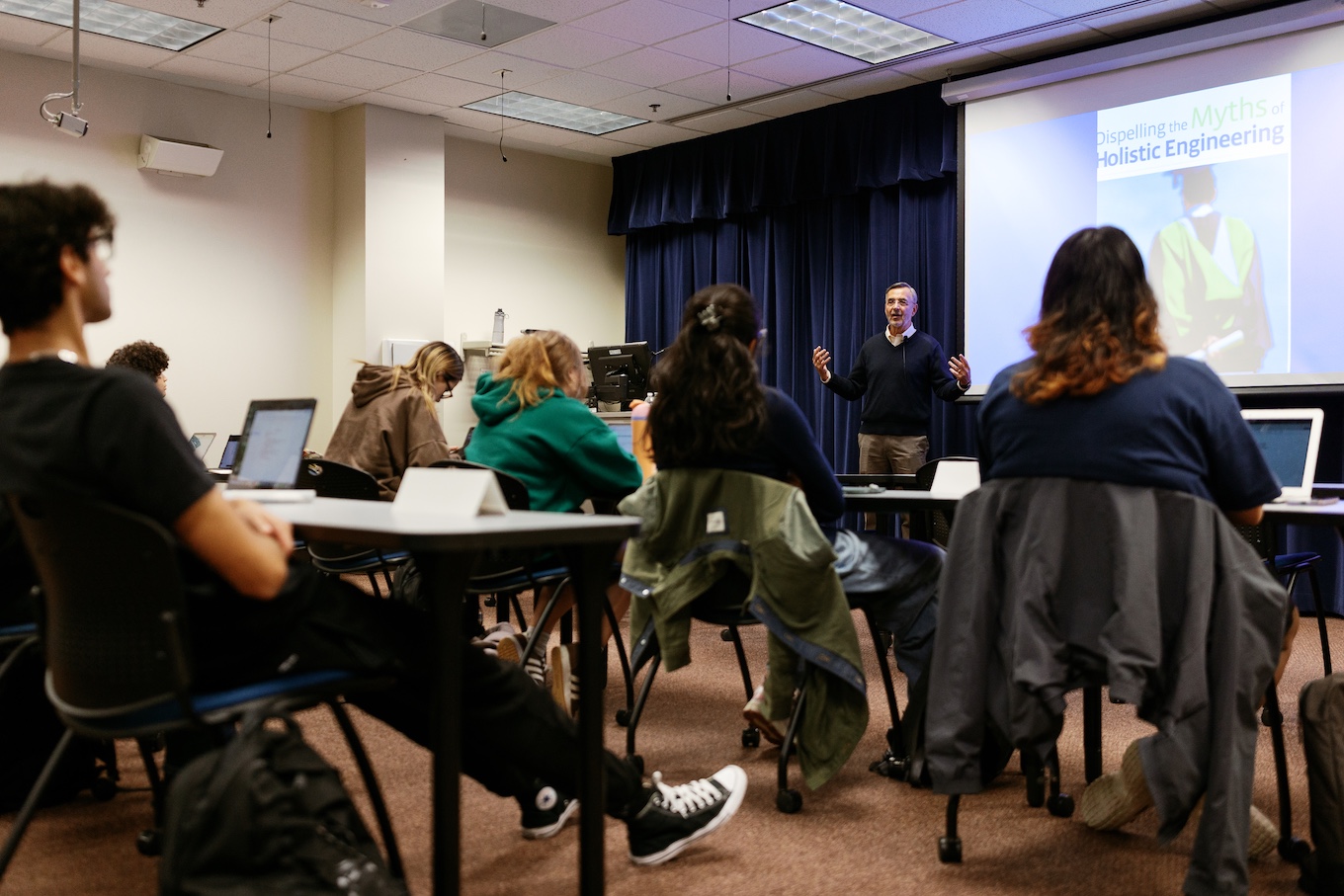
A group of seated students look to the front of the room, where a male professor in a suit stands.
During an October class session, Grasso spoke to the UM-Dearborn Honors students about holistic engineering.

Aossey said she has learned that intellectual empathy empowers people to engage thoughtfully with challenging topics, such as racism, too. She’s experienced firsthand the difficulties of being part of a Muslim family with Lebanese heritage while growing up in a predominantly white community in Iowa. Although her family immigrated to Iowa from Lebanon more than a century ago, their culture and skin color often led to exclusion. She recalled hearing racist remarks, including being told to “go home.” “I’d get so upset and frustrated. I’m from the United States, just like they are,” she said. “No one wants to be spoken to like that.”

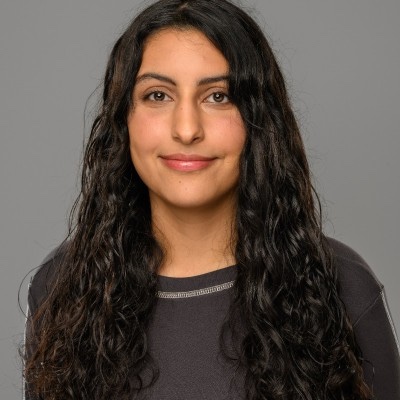
Photo of a smiling young female who with long dark hair. She is wearing a gray and black top.
Sophomore Jameela Aossey

Thanks to lessons she learned in Ways of Seeing, Aossey now reframes her responses. On a recent visit to Iowa, a white older woman approached her in a bookstore and asked what country she was from and why she was there. Instead of getting upset, she asked if the woman genuinely wanted to know. When the woman said yes, they sat down together and Aossey shared her family’s 100-plus-year history in Iowa. She also pulled up a map on her phone to show Lebanon’s location in the Middle East. “We had a really good conversation and we both learned something,” Aossey said. “She didn’t know anything about the Middle East other than what she'd heard from people who weren’t Middle Eastern — she didn’t even know where it was located on a map. She shared that she never graduated (from high school). She was acting from a place of ignorance, but was open to learning. And I realized that my frustration can close me off to these teachable moments. I’m not saying this will work in every situation, but I was pleasantly surprised how well it went.”

Junior Ishita Desai agreed that reflection before difficult conversations and trying to see from someone else’s perspective is helpful — even with people you’ve known your whole life. Desai, who is from Mumbai and was raised Hindu, said conversations regarding gender identity — specifically identifying as nonbinary — led to strained relationships with Desai's family. The economics major now approaches the nonbinary topic from a point of view that Desai’s religious mother would understand. “In Hinduism, the souls are genderless. When talking with my mother about accepting someone who identifies outside of the gender binary, I’m connecting it with religion and culture. It’s a work in progress, but it’s opened the door for more productive conversations,” Desai said. Desai chronicled this experience in a digital story, which is a capstone video project where each student filtered their perspectives and experiences through course themes. Students will share their videos on the last day of class.

Waung hopes the course will help students move beyond what she describes as today’s “me-first” mindset and work toward collective advancement. “We don’t need to share specific values, but we do need to find common ground and think collectively about goals for society to make things better,” she said. “Getting angry or frustrated because you do not agree with something takes energy — it’s draining. Let’s put that energy into a different kind of action to get a different result.”

Grasso, who wanted to teach again before his planned retirement in 2026, said he’s inspired by hearing the students’ ideas and witnessing their capacity for introspective reflection. “Spending time back in the classroom continues to be a source of joy and purpose,” he said. “Working with these bright, thoughtful and engaged students not only gives me great pleasure, but also hope for a sustainable, prosperous and compassionate future.”

Aossey said the course’s lessons about self-reflection, intellectual empathy and holistic thinking are preparing her for what’s next. Her professional goal is to work in Halal food certification, bringing more food options to rural areas in the United States. She said the job requires understanding culture, religion, business practices, safety regulations and food science.

“I’ve had a lot of great classes at UM-Dearborn, but this one is among my favorites because we hear from experts in different fields and see how everything connects — art, business, technology, all of it,” she said. “Challenging yourself to learn different perspectives — different disciplines, cultures and ways of thinking — can make you better at whatever you choose to do now and after graduation.”

In addition to Waung and Grasso, guest speakers have included Professor of Marketing Aaron Ahuvia, Assistant Professor of Industrial and Manufacturing Systems Engineering Areen Alsaid, Associate Professor of Women's and Gender Studies Amy Brainer, Professor of Anthropology John Chenoweth, Associate Professor of Physics Will Clarkson, Lecturer of Business Communications Jennifer Coon, Associate Professor of Psychology Francine Dolins, Associate Professor of Mechanical Engineering Amanda Esquivel, Professor of Philosophy Maureen Linker, Applied Art Lecturer Erik Mueller, Professor of Art History Diana Ng, U-M Vice President for Information Technology and Chief Information Officer Ravi Pendse, Associate Professor of Sociology Carmel Price and Professor of Public Health Natalie Sampson. 

Story by Sarah Tuxbury; photos by Matthew Stephens