

Over the past academic year, the Biomedical Engineering Society engaged nearly 500 K-12 students across Dearborn through high-energy, interactive science programming — and the group earned a national award for its outreach.
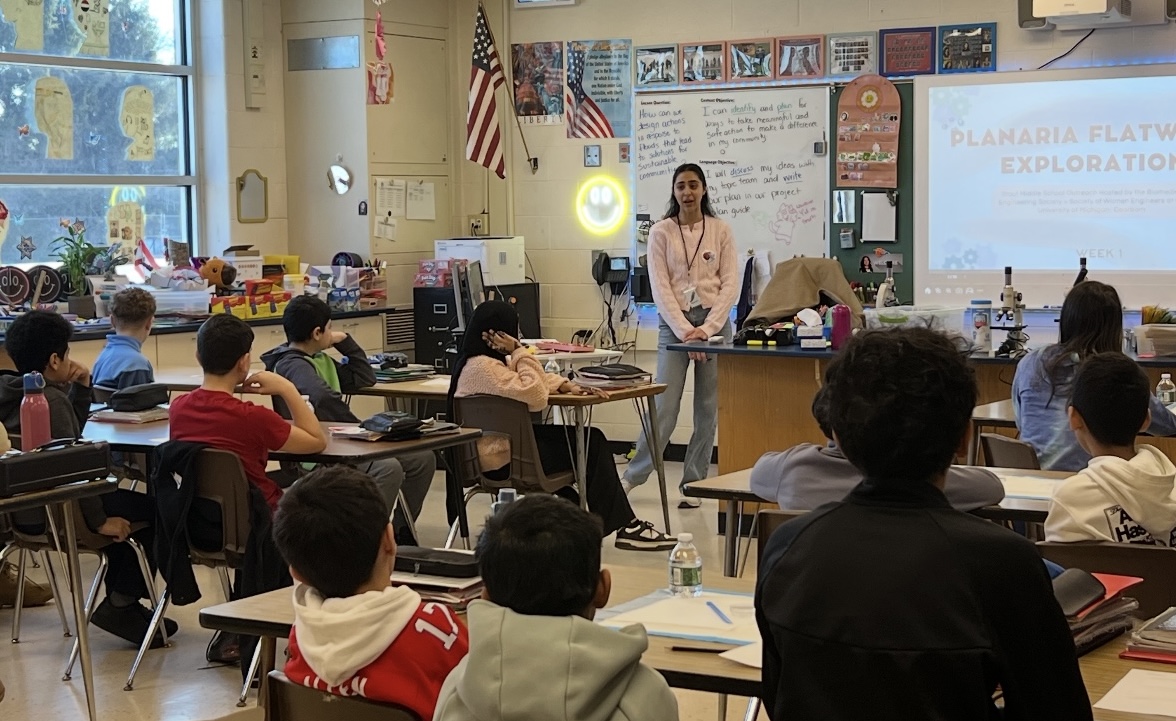
Members of the UM-Dearborn student group taught elementary-aged students how to extract DNA from strawberries. At local middle schools, they showed kids how to create custom hydrogels — a polymer that’s often used in wound care — and explored how modern bioengineers deliver drugs directly to target cells. And they brought high school students to campus to explore the university’s labs.
“We wanted to show younger students that engineering isn't just about cars and code. It can also be about changing lives,” says Sena Alenzi, a bioengineering and mechanical engineering major. “I didn’t know about biomedical engineering before coming to UM-Dearborn. I went to Dearborn schools and wanted to make students there aware of what’s possible to study early so they know what careers are out there.”
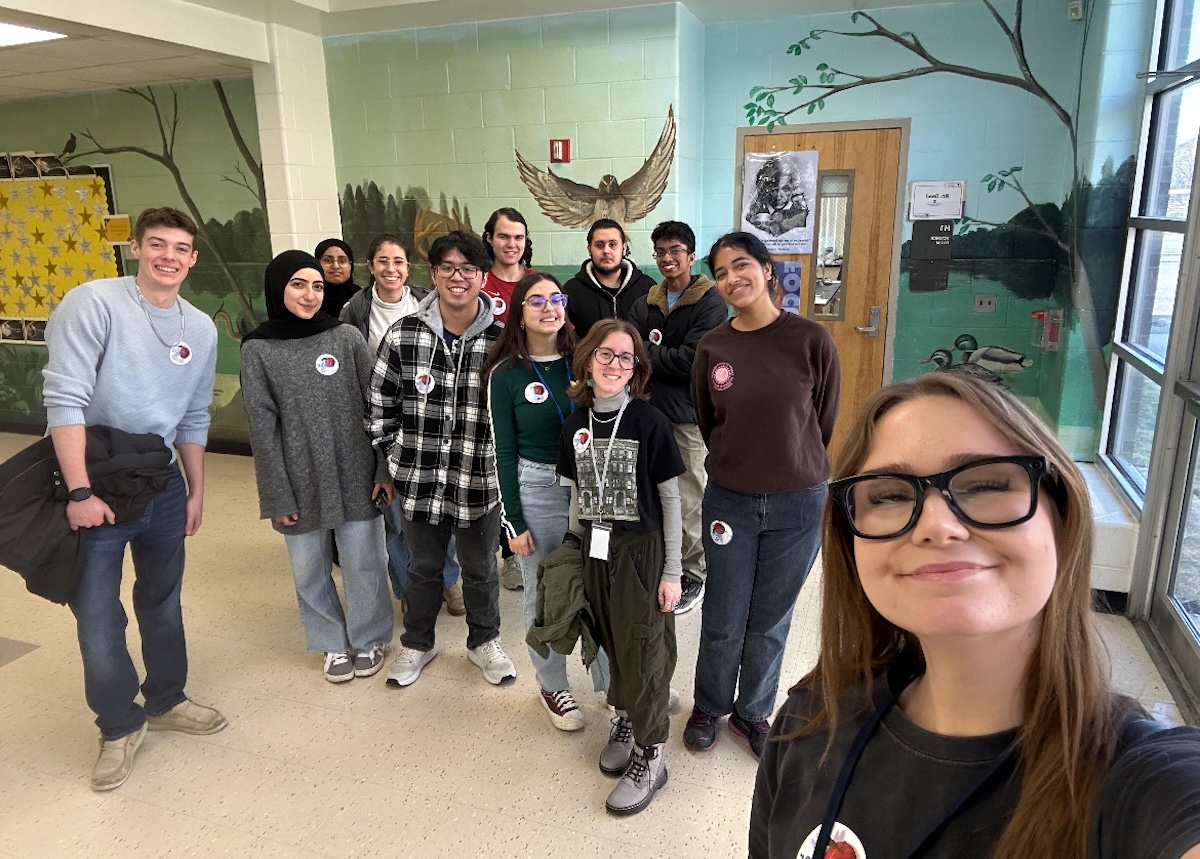
Earlier this month, Alenzi traveled to the Biomedical Engineering Society national meeting in Florida to accept the Outstanding Outreach Program Award on behalf of the group. Only one college nationally is chosen for the award. Along with former BMES President Lea Miller, Alenzi also led a best-practice panel at the meeting, detailing how the group built a powerhouse STEM outreach initiative. They were joined by fellow award-winners from schools across the country, including UCLA, University of California-Irvine and University of Texas at Austin.
“Our chapter prioritized outreach this year because we wanted to be the mentors that we would have loved to have as younger students," says Miller, who recently earned her master's degree in bioengineering from UM-Dearborn. "We tell the kids that these are real experiments that scientists do in the lab and that they are learning the protocol. Many of them have told me that they want to be doctors. And that’s great — but maybe now they will consider biomedical engineering."
Both Alenzi and Miller, the leads behind the outreach efforts, graduated in 2026. But they developed an outreach “plug-and-play” tool kit — with lesson plans, classroom science project instructions and local school contacts — for the UM-Dearborn chapter to continue this work.
BMES outreach chair Issraa Fakih, a bioengineering and mechanical engineering senior, says the organization will continue to host interactive STEM activities with local public school students.Upcoming hands-on projects include creating a slingshot project to teach core engineering principles to elementary-aged children and a multi-week planarian regeneration program — using aquatic flatworms, which are known for their bodies’ regenerative abilities — for fifth and sixth graders to explore the scientific process of tissue repair.
Miller and Alenzi say what makes the BMES’ work even more compelling is that the group members aren’t just teaching science. They are actively doing it too. Miller and Alenzi say that the connections made through club involvement often led to research opportunities.
Miller conducted research alongside Assistant Professor of Mechanical Engineering Caymen Novak, using 3D tissue models and mechanobiology approaches to investigate how interactions between cells and the extracellular matrix influence tissue fibrosis and remodeling. Miller now works for HistoSonics, an Ann Arbor-based medical technology company developing noninvasive treatments that use ultrasound technology.
Meanwhile, Alenzi works as a research assistant in Assistant Professor of Mechanical Engineering Aditya Raghunandan’s lab, developing microfluidic models of Alzheimer’s disease. These microscale "brains-on-a-chip" mimic human neurological conditions, creating testing platforms for new pharmaceuticals without relying on animal models. She is also applying to graduate schools.
Even though its members typically work in high-tech labs, Miller says BMES is friendly and low-pressure. She joined after attending a “Cocoa and Cram” study session. Alenzi got involved to make new friends in the wake of the pandemic.
Membership is free and open to all disciplines — from mechanical engineering to chemistry to premed. The group hosts monthly meetings, alumni networking panels and guest speaker series. Interested students can learn more from the BMES Instagram.
“The current members are looking to build upon what we started last year — so there’s a lot of great momentum going with the chapter,” Alenzi says. “If you like science and want to be a part of a group where you can help mentor the next generation, this is a good place for you.”
Story by Sarah Tuxbury. Classroom photos courtesy of Sena Alenzi.


