

Joe Zaremba manages multimillion-dollar accounts as a vice president at the global market research and public opinion consulting company Ipsos. But before he was guiding national strategy, the 2007 College of Business alum was a UM-Dearborn student learning how to use raw data to inform real-world decisions.
That experience came from his time with iLabs, UM-Dearborn's center for innovation, which connects students directly with local business partners to solve practical problems. Hundreds of UM-Dearborn graduates have benefited from the center’s market research project opportunities during its 20-year history — and Zaremba was one of the first.
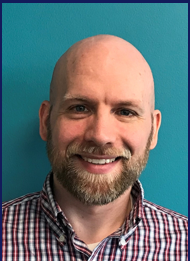
"When I went into job interviews after college, I was actually able to talk about real-world projects I had already worked on, from survey design to sample selection and report generation," recalls Zaremba, who worked on a post-graduation expectation survey for the university. “ILabs gave me the foundation I needed to be successful and I’m glad it continues to do that for students today.”
Established by former faculty member Kim Schatzel in 2006, iLabs has connected UM-Dearborn students with regional businesses, governments and higher education institutions to drive economic impact, solve complex challenges and cultivate essential professional skills. Schatzel, an associate professor of marketing at the time, served as iLabs’ first director. She was later named dean of COB and then went on to serve as president at Towson University and the University of Louisville.
After two decades, iLabs continues to serve as an essential bridge connecting classroom theory with practical application, says iLabs Director Tim Davis.
Students consult with a range of clients from local businesses to city governments and even partner w/ the COB Dean's Office to track the student experiences and graduation expectations of its students in order to provide the right opportunities needed to reach goals. And, for an annual project, iLabs’ student researchers highlight successful communities through their eCities report, which blends data analytics with feedback from municipalities to show how cities are developing thriving business environments.
The center also organizes pitch competitions, business showcases and entrepreneurship workshops. They are launching the university’s first iLabs Case Competition on Friday. During the daylong event in Fairlane Center South, students will show a panel of judges how they analyze a complex industry problem and develop a strategic recommendation.
"Entrepreneurship doesn't have to be people starting businesses. It’s more than that. It's this attitude of 'I can overcome a lot of things and find a solution for problems that other people might not have thought about addressing,'” Davis says. "Through our networking, we’ve noticed that businesses want an entrepreneurial mindset. They often list it on job postings as a preference or skill qualification. That’s what iLabs does. We focus on developing that entrepreneurial mindset.”
While iLabs does help students sharpen technical skills in tools like Qualtrics, SPSS, Tableau and Excel, Assistant Director Kari Kowalski says the core value of iLabs lies in developing soft skills. She says the ability to talk to people and ask questions, notice patterns in data and present to clients are essential in market research work.
"ILabs gives our students real-world experiences where they practice these important soft skills like the ability to sift through massive amounts of qualitative or quantitative data and distill key narratives," says Kowalski. "At first, our students may get those butterflies in their tummy. But it will be in the safety and comfort of the university, knowing it's OK to make a mistake because it's a learning experience before the stakes get higher in their careers. This is the launching pad."
Kowalski notes iLabs student consultants demonstrate skills like the pattern recognition needed for spotting operational and market trends. Students showcased these abilities during a recent project for Pop Daddy Snacks, a Michigan-based gourmet snack brand.
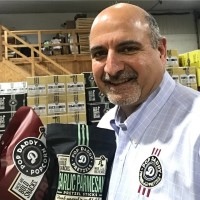
Pop Daddy Snacks owner Mark Sarafa, a 1989 COB alum, partnered with iLabs for an academic year. The student consultants — guided by Kowalski and Davis — analyzed vast sets of retailer scanner data to help his business refine its pricing strategy when negotiating with major retailers. Sarafa, a popcorn aficionado, started the company out of his home with his wife Erin and their two children. Today, Pop Daddy Snacks products are in more than 30,000 U.S. retail locations and across four countries.
“You would have thought these students were in the industry for eight or 10 years with the information they brought back," he says. For example, students used the data to analyze Pop Daddy Snacks' price point and learned that the premium product’s actual shelf price across their retailers was in line with WalMart’s lower pricing strategy once promotional discounts were applied. “The students learned very quickly what I was looking for and brought back information that will be helpful in future negotiations,” he adds.
Davis, who was a COB graduate student during the early days of iLabs and worked with Schatzel, says the center continues the work it was founded to do. One of its first projects measured the economic impact of the Detroit Metropolitan Airport. That project was led by Schatzel and Associate Professor of Business Economics Lee Redding. The group demonstrated to the Wayne County Airport Authority that, at that time, fewer than 10% of travelers surveyed were staying locally — most were simply transferring flights. But the travelers who did stay spent roughly $1.7 billion annually on hotels, meals, rental cars and related local services.
As the iLabs team looks toward its next 20 years, they continue to adapt their toolsets — incorporating modern technologies like AI into long-standing research projects like eCities, for instance — while remaining dedicated to fostering both student confidence and regional impact.
"What's special about a center built on students is the community that grows across the generations,” Davis says. “We're proud of hundreds of iLabs alums and, as we evolve, iLabs continues to be a big, welcoming bucket for entrepreneurial and innovative projects throughout the region."
It’s been 20 years since Zaremba’s iLabs research experience. But he continues his involvement with iLabs through mentoring students — and says the lessons learned as a UM-Dearborn COB student remain with him.
“It’s where I developed a passion for market research. I’m grateful for my time with iLabs, ” he says. “I’ve made my life, my career based on that. Although my career responsibilities have evolved, I’m still working in the market research field and I’m happy to say that I still enjoy the work I do."
Story by Sarah Tuxbury. Headshots courtesy of Joe Zaremba and Mark Sarafa


