

A big overhaul of the Mardigian Library is a central part of the university’s Comprehensive Campus Plan, though that upgrade is probably still a few years away. That hasn’t stopped Jean Song, the director of the Mardigian, from bootstrapping a few parts of the larger vision. She remembers a time a couple years ago when a few of her fellow library directors in the Michigan Association of State Universities were talking about the success of their family study spaces, where students with caregiving responsibilities can work alongside their kids. Not long after, she noticed a faculty member scanning materials alongside her young daughter. “She had laid out a picnic blanket and set out some dolls for her daughter to play with,” Song recalls. “And I thought to myself, ‘You know, I think a family study space would be quite helpful here.’”
It took a couple years and some creativity, but earlier this month, the Mardigian Library’s new family study room officially debuted with a kickoff open house. The room on the first floor features a workstation for adults and is stocked with children’s books, kid-sized furniture, whiteboards and markers, and a monitor that plays free kids movies. The space was created primarily with students in mind: UM-Dearborn doesn’t keep statistics on this, but nationally, about 20% of undergraduates are caring for kids. And Song says the space is also there to serve faculty and staff who have caregiving responsibilities. “Given we’re a commuter campus, I think it’s very possible there might be students who have a class, and then have to go pick up their child, and then have a work session with their study group and need a place to do it,” Song explains. “Or maybe you’re a faculty member, and your partner couldn’t pick up the kids, and now you need a comfortable place to work for a little while. Here’s a place you can do that.” Right now, the family study room is available by reservation, and Song says two parties can reserve it concurrently.
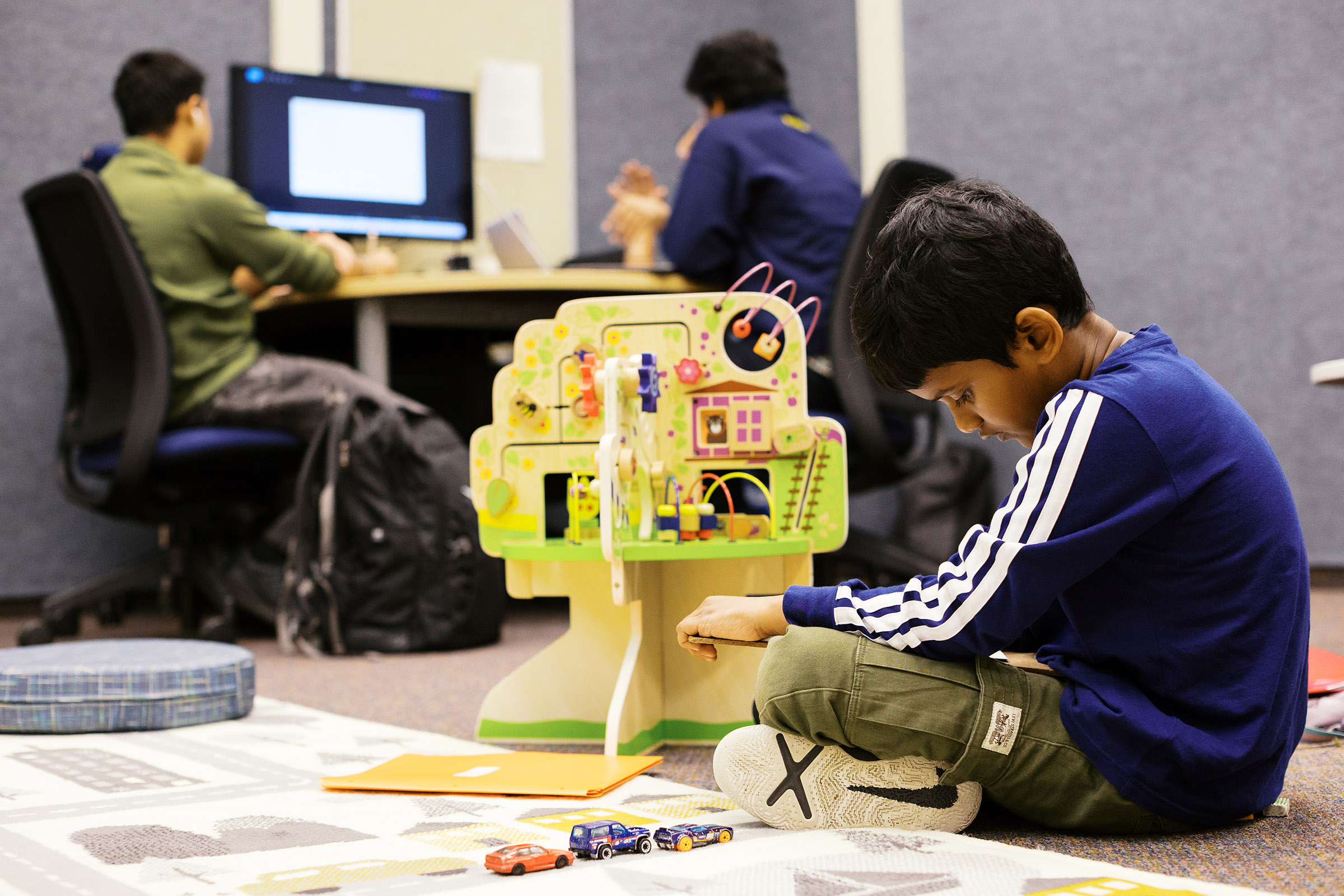
The family study room is a great example of how Song and the library staff are making the most out of existing spaces and materials. Song says Associate Director Holly Sorscher gave up a “fantastic office” to make the family study room possible, and Song plans to continually refresh the book collection through donations. Up on the third floor, you’ll see two more examples of this creative approach. Using some large whiteboard room dividers and furniture from the Talent Gateway, which is scheduled for a phase out at the end of the Fall 2025 semester, Song and the team carved out what one staff member has dubbed a “study cabana,” a no-reservation-needed, semi-enclosed space where groups can meet. Knowing that private group study spaces are in short supply in the building, the staff also decided to open up their larger staff conference room after 5 p.m. on weekdays and all day on weekends to student groups. “So during those hours, that’s basically a 50% increase in our group study areas,” Song says. Up on the fourth floor, they also created a gender-inclusive bathroom, repurposing a bathroom that was previously only accessible to staff.
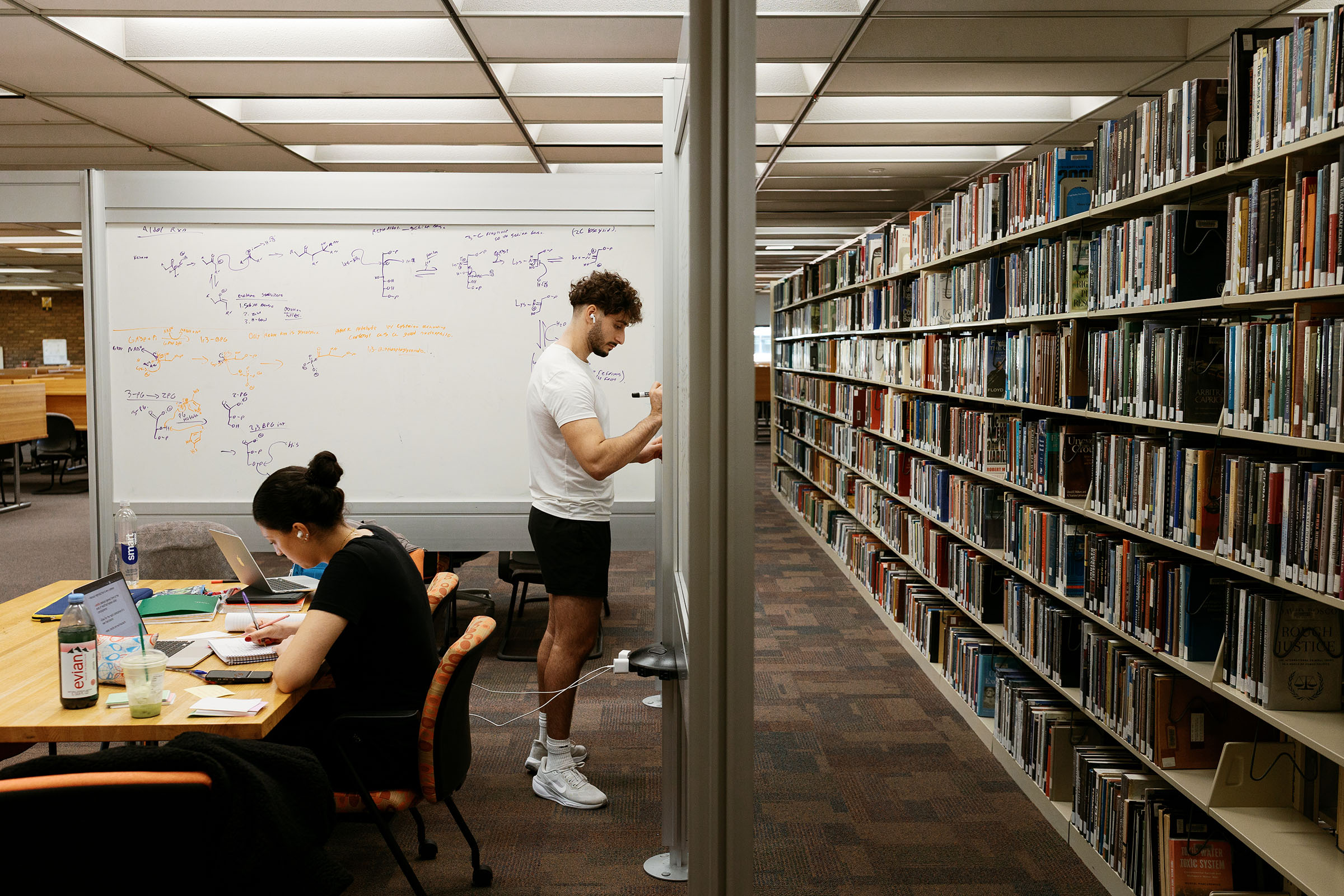
Song says all four of these projects are aligned with the larger vision of a more accessible library that she still hopes to realize at scale once more funding is available. But she thinks smaller efforts like this are still very useful, both in the near-term and as a way of informing decisions for the future. “It’s good for us to pilot some of these things to see how people actually use them, how their study habits are evolving and what kind of spaces they prefer,” Song says. “For example, I always think of the library as not having enough electrical outlets, but maybe that’s just me, and students feel like they already have what they need. And with the family study room and the other spaces, we’ll see how much demand there is, or how well a reservation system works. That will give us a chance to rethink our approach if we need to when we are able to do a larger renovation.”
###
Story by Lou Blouin. Photos by Matthew Stephens.


