

High-capacity batteries that are capable of storing renewable energy for anytime use are seen as a vital part of transitioning the world off fossil fuels. But to do this, we’ll need bigger, better batteries than the lithium-ion-based technologies that commonly power today’s electronics and electric vehicles. One of the most promising emerging solutions is lithium metal batteries, which have an energy density that’s two to five times greater than their lithium-ion counterparts. Second-year PhD student Jinrong Su says lithium makes a great material for batteries primarily because it’s so reactive. “But the same property that makes it extraordinary also makes it dangerous,” she says. In particular, internal short circuits that can lead to catastrophic overheating — and fires that are very difficult to extinguish — have thus far held back lithium metal batteries from commercialization.
This “thermal runaway” and short circuiting is triggered when microscopic structures called dendrites penetrate the separator that normally divides the two sides of the battery. Su’s advisor, Associate Professor of Mechanical Engineering Lei Chen, who’s one of the world’s leading experts on thermal runaway, says it’s a highly complex phenomenon, and researchers are still getting a handle on dendrite formation and how it leads to catastrophic failures. Studying dendrite-induced internal short circuits, or ISCs, is challenging — primarily because the phenomenon is difficult to observe with real-world experiments. Techniques for directly studying dendrite formation, like specialized microscopy, are still in development, and dendrite-induced ISCs are difficult to create and control in a laboratory environment. In lieu of physical experimental data, researchers have turned to advanced mathematical models that attempt to replicate the battery’s most important physics-based properties and how they interact with each other. These models have given researchers like Chen far more insight into various pieces of the puzzle, like which factors could be influencing dendrite growth or specific phenomena that are associated with ISCs. But up until now, Chen says these models haven’t been able to grasp the bigger picture — like, how the dendrite microstructure, observational phenomenon like drops and recoveries in cell voltage (which indicate possible ISCs), and the overall risk of thermal runaway are connected — or how various factors might be influencing each other.
Recently, researchers have been using machine learning to decode some of this complexity, owing to its uncanny power for identifying subtle correlations. Unfortunately, Chen says these machine learning-based techniques have limited capacity to give researchers one thing they’re particularly interested in — namely, a description of what physical mechanisms or relationships between mechanisms contribute to short circuit risks. The reason is that typical machine learning models are, by their nature, “black boxes.” That is, while they can make complex connections and develop a kind of “understanding” of what factors might be contributing to short circuits, that understanding is opaque. A model has no way of revealing to a researcher its “thought process” and how it came to its conclusions.
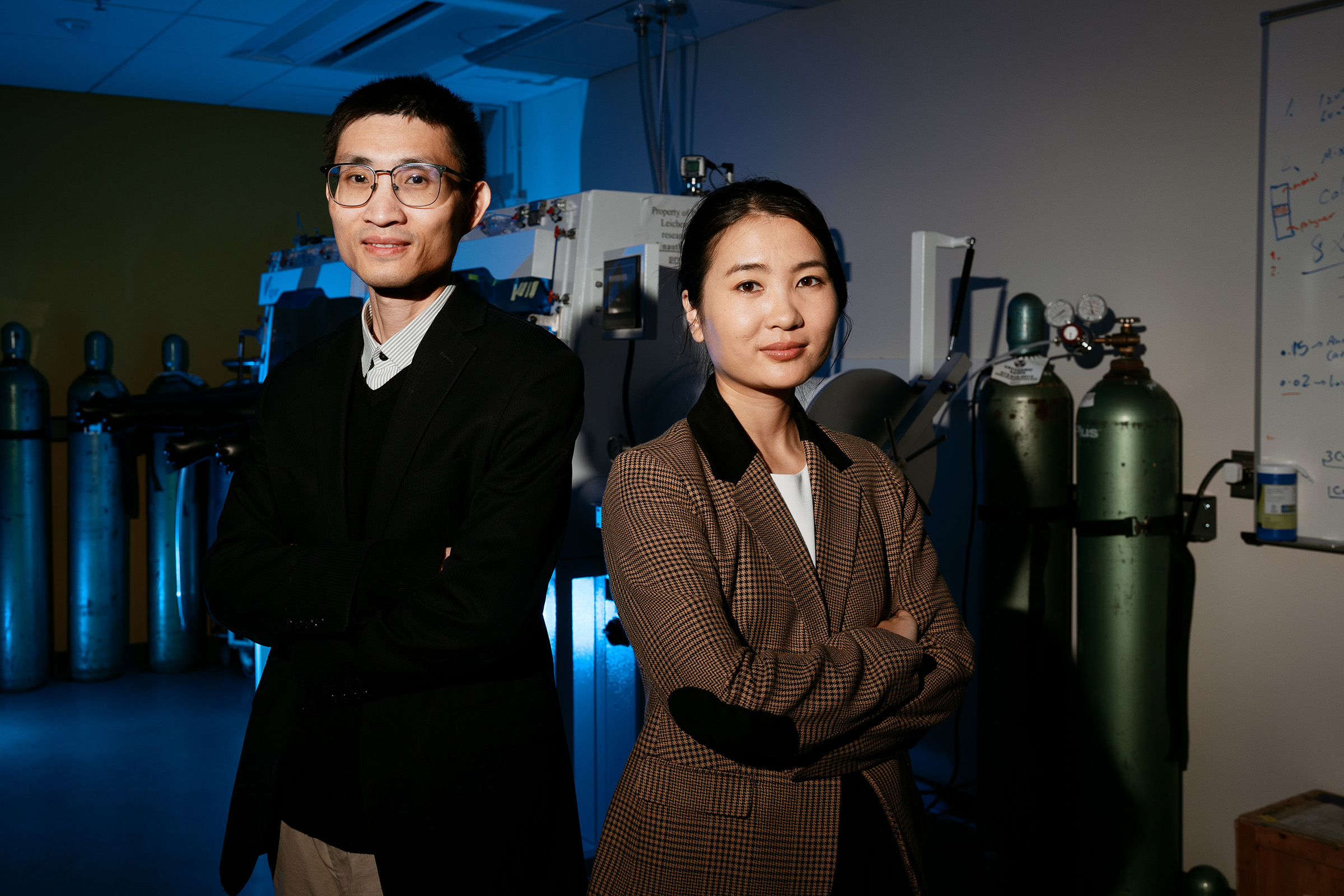
Su and Chen’s latest work offers a promising modeling breakthrough. Their “dual-scale model” first describes the dendrite growth process under various conditions, revealing how the battery’s material properties and operating conditions impact ISCs. They then extract data for seven key features, like the thickness of the electrolyte or the charging rate, that are thought to contribute to ISCs. That data then serves as input for a machine learning model, which correlates the features with risk of thermal runaway. Finally, using explainable AI techniques, they turn their black box model into a “white box” — revealing the model’s “thought process” and the features that are the most important contributors to thermal runaway. For example, Su says based on their analysis, it appears that grain boundary defects and electrolyte thickness are the dominant factors that influence ISC risk and potential thermal runaway. Their approach even provides useful quantitative details for each key feature, such as an electrolyte thickness value that is sufficient to minimize risk.
Such details could be an important breakthrough, especially for engineers who are working on designing safer batteries. If engineers knew, for example, the optimum parameters for grain size, electrolyte thickness, etc., they would essentially have a new recipe for creating lower-risk lithium metal technologies. Still, Chen cautions it’s early days for this new approach. He says the next step would be to conduct real laboratory experiments of dendrite-induced short circuits that lead to thermal runaway. Data from those experiments would be used to validate their mathematical models — and be fed back into the model to hone its accuracy. Chen says UM-Dearborn is currently exploring options for laboratory equipment that could handle these kinds of intense experiments. When you’re studying what is essentially a hard-to-control chemical fire — even a small one — safety is of chief importance.
Chen, who’s worked with a number of talented doctoral students over the years, isn’t short on praise for Su, who led this project and is first author on a recently published paper summarizing their new approach. “This is exceptional work. Jinrong is a second-year PhD student. I would say even after four years, as they’re approaching their dissertation defense, many PhD students could not publish a paper like this,” Chen says, adding that one of Su’s intangibles is time management. “First of all, Jinrong is talented and she has a very solid background in engineering fundamentals. She’s also very hard working. But I’ve noticed she is very good at looking at a problem, making a plan and creating a timeline for achieving her targets. A lot of students don’t necessarily think this way, but this is a very good practice for research.”
Su’s work is even more impressive when you consider that she didn’t have any experience with these modeling techniques when she started in Chen’s lab in 2023. Moreover, she says when she arrived at UM-Dearborn in 2022 to finish the final year of her undergraduate degree, she understood very little English and essentially couldn’t speak it at all. “The hardest part was staying motivated,” she says. “The simulations were all new to me, and sometimes the model would crash after running for many hours. But I would just discuss it with my labmates and Professor Chen, and they were so helpful at giving me suggestions to fix things, one piece at a time. I’m so grateful for everyone’s support.”
###
Story by Lou Blouin. Photos by Matthew Stephens.


