

UM-Dearborn is again recognized as a community engaged campus by the Carnegie Foundation for the Advancement of Teaching.
The designation, earned by 237 campuses nationwide in 2026, acknowledges the university's engagement and impact in Dearborn, across southeast Michigan and throughout the state. UM-Dearborn was first awarded this elective classification in 2015. The latest designation, announced Monday, reaffirms the university’s leadership in community-engaged teaching, research and outreach.
Office of Community Engaged Learning Outreach and Engagement Specialist Molly Manley, who led the university’s reclassification effort, said the Carnegie Community Engagement Classification recognizes community engagement as mutually beneficial partnerships with industry, business, nonprofits and governments for the public good.
“The Carnegie Community Engagement Classification focuses on partnerships with reciprocal relationships and benefits. It recognizes that we aren’t doing things to or for our community, but with our community,” she said.
Manley, who helped secure the first Carnegie Community Engagement Classification recognition in 2015, added that ever since the university’s founding in 1959, UM-Dearborn has worked to meet the needs of southeast Michigan. Because UM-Dearborn’s foundational purpose was to address an identified need of training and educating students to work in automotive and manufacturing capacities, the university has served as a talent pipeline since the beginning.
“Our commitment to community was ingrained into the university from the time it was created. We were created specially to support industry in the area, specifically Ford Motor Company,” Manley said. “We were founded for a very different purpose than many other higher education institutions and that shows in how we still prioritize partnerships in the community and real-world experiences for students today.”
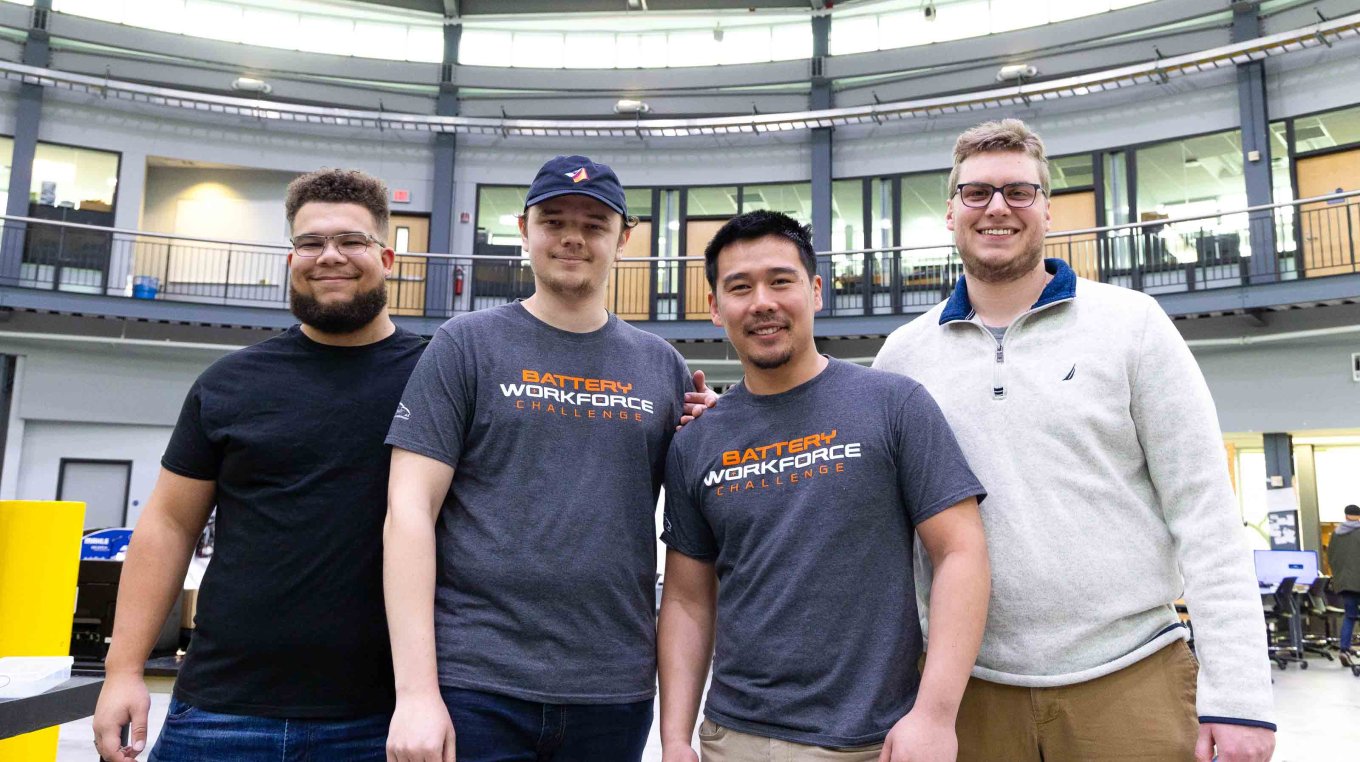
Currently, UM-Dearborn faculty and staff are leading more than 200 mutually beneficial and public service partnerships including:
- The Battery Workforce Challenge, a national competition cosponsored by the Department of Energy and Stellantis, gives UM-Dearborn and Henry Ford College students an opportunity to train on electronic vehicle batteries and vehicles, while preparing them for in-demand careers. Advised by Associate Professor of Electrical and Computer Engineering Xuan (Joe) Zhou, students designed, built, tested and integrated an advanced EV battery system into a future Stellantis electric vehicle.
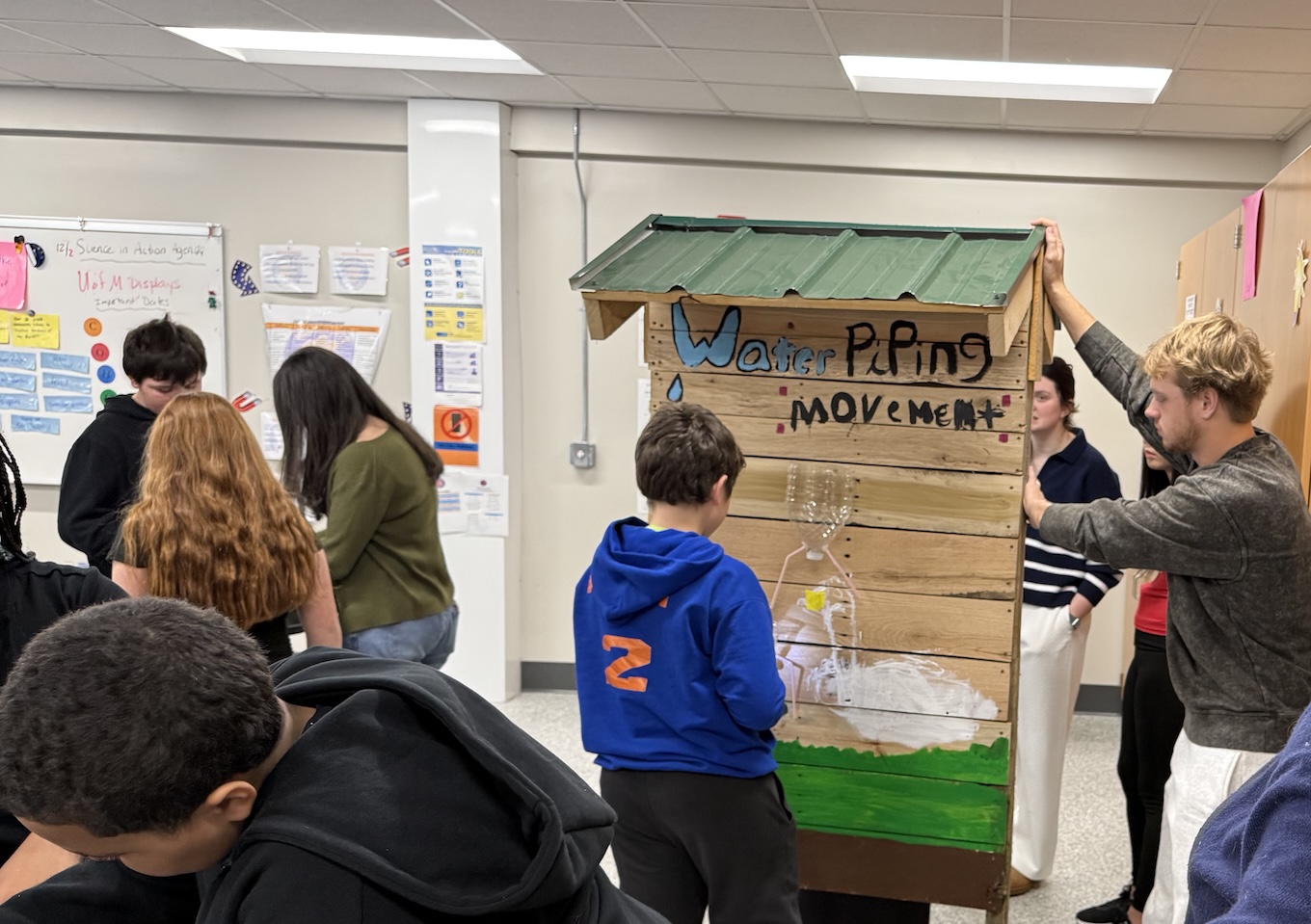
- Professor of Education Christopher Burke and his UM-Dearborn Community-Based Education and Social Justice class works with Garden City Middle School to provide interactive activities and learning support for junior high school students.
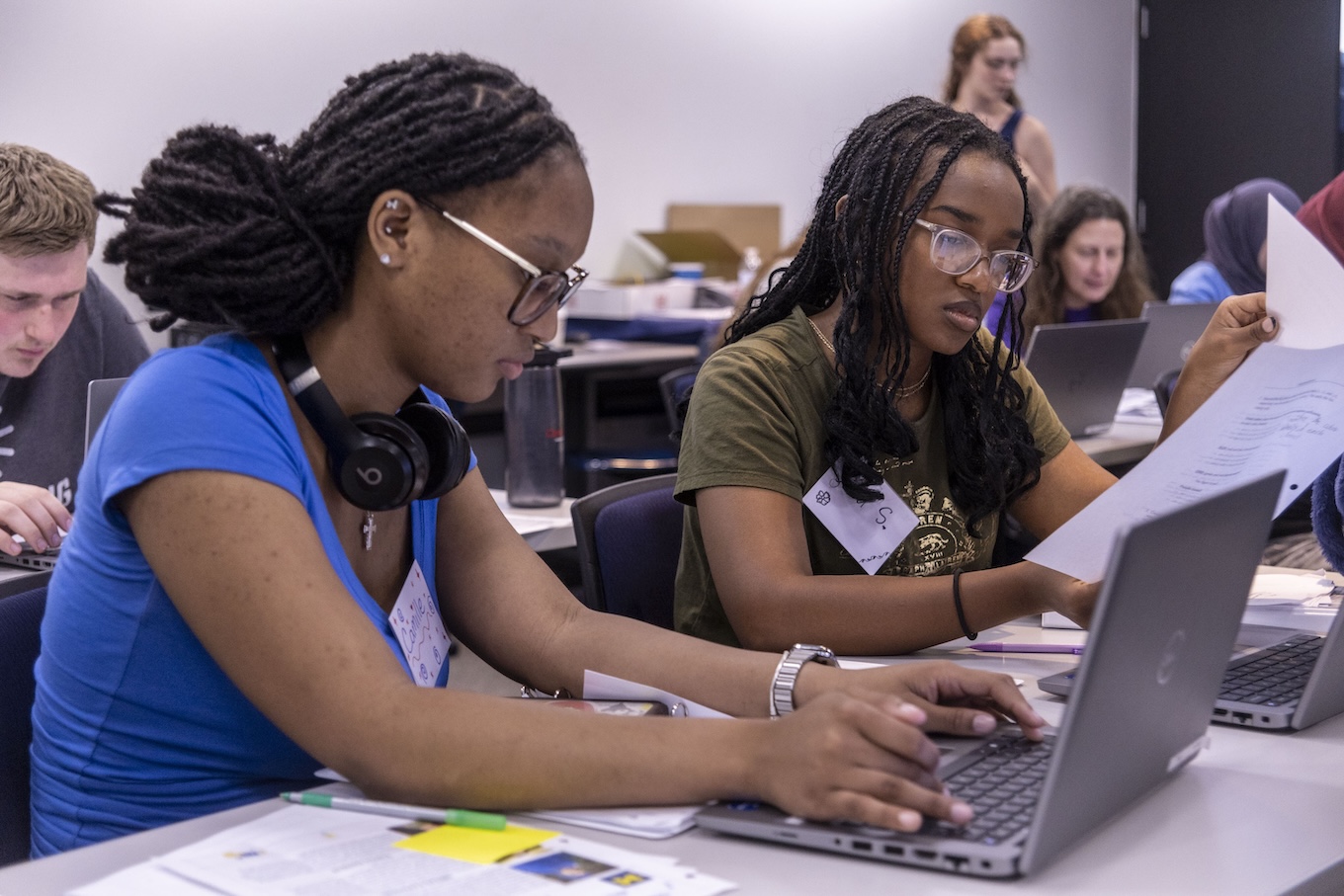
- The STEM-focused summer camp GirlsGetMath — organized by Mathematics and Statistics associate professors Yulia Hristova, Hyejin Kim and Aditya Viswanathan — offers interactive guest lectures, activities and computer lab sessions surrounding mathematics for area high school students in an effort to strength math skills while increasing awareness about the opportunities available for females in fields like engineering, mathematics, physics and information technology. The camp includes UM-Dearborn students as mentors, which gives them experience simplifying and explaining complex topics.
Cass Technical High School junior Sena Segbefia, who wants to be an engineer, attended the GirlsGetMath camp over the summer. “The Michigan name let me know that it would be a good learning experience, but GirlsGetMath has exceeded any expectations that I had,” she said. “A lot of engineers use programs like Python and MATLAB and this camp gave me my introduction to these. I don’t have the money to pay for a class to learn how to use these programming languages — but now I have some experience programming and coding. I liked it and am now confident using it in the future. I feel like I have a head start.”
Experiences like Segbefia’s are important in UM-Dearborn’s efforts to serve southeast Michigan populations. Data shows that students who attend UM-Dearborn are from the local community — and they stay connected to the community during and after their time at the university. The numbers bear this out: 94% of undergraduates are Michigan residents and 94% of students who accepted employment after graduation in 2024-25 stayed in Michigan.
To amplify UM-Dearborn’s efforts and demonstrate the commitment to community belonging and partnerships, the university leadership — with campus input — updated the mission statement in 2022 to emphasize the importance of mutually beneficial partnerships and real-world impact.
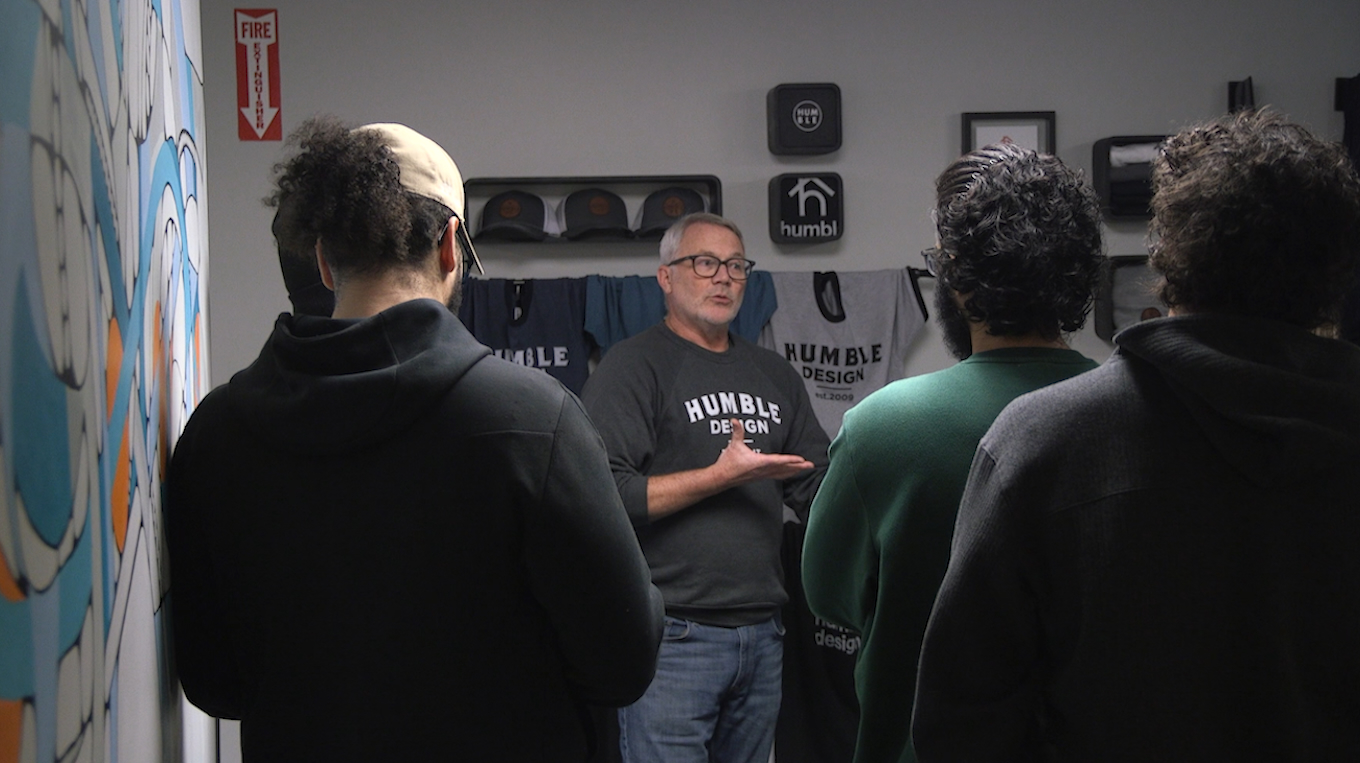
In addition, Manley said OCEL’s work has become more strategically focused on supporting faculty in developing community-engaged courses for the university’s practice-based learning initiative. From 2022 to 2025, the university’s community-engaged PBL offerings increased from 20% of all courses to 49%. One community-engaged PBL course is Lecturer of Business Communications Jennifer Coon’s Managerial Communication, which partners with Humble Design Detroit, a nonprofit that custom designs and fully furnishes home interiors for people emerging from homelessness. In the class, UM-Dearborn students gain real-world experience by using their logistics education and grant-writing skills to help support Humble Design’s life-changing makeovers — in addition to learning about societal issues that can lead to homelessness.
Manley, who is a UM-Dearborn alum and has worked at the university since 2013, said she’s grateful to be a part of a university where faculty, staff and students understand that lessons don’t just happen in classrooms.
“It’s really important to show that we see ourselves as a part of our community and that we have a value that goes far beyond a workforce development tool that helps students get jobs,” she said. “We are also a place that works to expand knowledge in a way that serves the public good. As a public institution, we should value community impact and value the voices of our community — and that means we need to prioritize being an engaged institution.”
###
OCEL tracks community-engaged projects across the university through the Collaboratory database. Check it out to learn about additional community-engaged projects or to add your own.
Several offices and university members contributed to the Carnegie Community Engagement Classification application, which is a multiyear process. Manley thanks the OCEL staff, the Institutional Research staff, Dean of Students Amy Finley, Associate Provost Maureen Linker, Director of Communications Kristin Palm, Vice Provost for Research and Dean of Graduate Studies Joan Remski and Chancellor Gabriella Scarlatta.
Story by Sarah Tuxbury


