

UM-Dearborn’s College of Education, Health and Human Services recently launched a 2+2 pilot elementary education program that enables aspiring teachers from Jackson College, Northwestern Michigan College and North Central Michigan College to begin their studies locally and then transfer to UM-Dearborn to finish the remainder of their coursework online. The beauty of the program, which is soon expanding to additional community colleges, is that students can complete their clinical hours and student teaching in their local communities, eliminating the need to relocate for a four-year degree. Now, a similar change is set for the very top programmatic offering in UM-Dearborn’s Department of Education. Starting in Fall 2026, the Doctor of Education degree, or EdD, will be offered fully online, enabling students from outside the program’s traditional southeast Michigan recruiting ground to earn a terminal credential commonly held by academics, superintendents and thought leaders in the education field.
Expansion of online programs is hot at colleges and universities right now, and many times, the motivation is enrollment growth. Indeed, though the EdD program has long been a favorite among faculty and alums of the program, its draw has always been small, with annual cohorts ranging from six to 18 students, almost all of them part-time. But Professor of Education Paul Fossum says vastly expanding the program’s enrollment wasn’t the motivation for an all-online EdD. For one, he notes, whether online or in-person, doctoral programs require intense commitments from faculty, who not only teach the graduate-level classes, but oversee dissertation research for their mentees. “As sexy as it might sound from a tuition perspective, we would choke on a 100-student cohort,” Fossum says. “A department of our size wouldn’t be able to do it, and do it well. So the sky is not the limit.” However, being able to pull from a statewide pool could very well provide some financial stability for the EdD program. By always having a full cohort and full classes, Fossum says the department avoids a scenario where you “have to have a section of a course just for one student” — which is a financial no-go for universities.
Moreover, the fully online format isn’t the only significant change coming to the program. Over the past two years, Fossum and a group of his colleagues who served on an EdD revisioning committee determined that the program would benefit from more focus. Back when the EdD program was created, it provided students with a lot of options. They could choose from among three tracks: curriculum in practice, urban education and — for aspiring school administrators — central office. For their capstone project, they could complete either an applied project or a traditional dissertation. But Fossum says the choose-your-own-adventure nature of the program fractured the already small cohorts and diluted enrollment in particular classes. Moreover, nearly everyone chose a dissertation, albeit usually with an applied theme. “Among students, I think there was a perceived status discrepancy between the dissertation track and the applied research capstone project,” he says. “So the latter sat there as an option in the handbook only. They didn’t want a ‘doctorate lite.’”
Fossum says, in general, those running doctoral programs branded as EdD — as opposed to traditional PhD programs — can face challenges communicating what the programs are all about. And he argues the distinctions between the two kinds of terminal education degrees sometimes feel a little arbitrary. The PhD is thought of as the traditional credential for academics in the education field, but he says there are plenty of faculty at American universities with EdDs. Similarly, the EdD is often conceptualized as a professional degree — akin to an MD in the medical field or a DEng in engineering. But EdD programs, including UM-Dearborn’s, are often just as deeply rooted in research, and not everyone who pursues one sees themselves becoming a superintendent.
Fossum and his colleagues say the new design of the program attempts to create some clarity, so prospective students know what they’re getting. To that end, the new-look EdD, described formally as a Doctor of Education in Leadership for Educational Innovation and Community Impact, has just one track. Every student takes the same 45-credit core in theory, research and leadership, before diversifying into a small number of elective courses and eventually starting a dissertation, referred to now as a dissertation in practice. Notably, every candidate now takes the 21 leadership credits, which qualifies them for the Central Office Endorsement from the State of Michigan, the credential required for superintendents and those in other top leadership roles at the school district level. “So whether or not that is their aspiration and intention, we concluded that it would be good for them, the program and for the state to have leaders who are prepared in this way — to think about themselves as leadership-capable,” Fossum says.
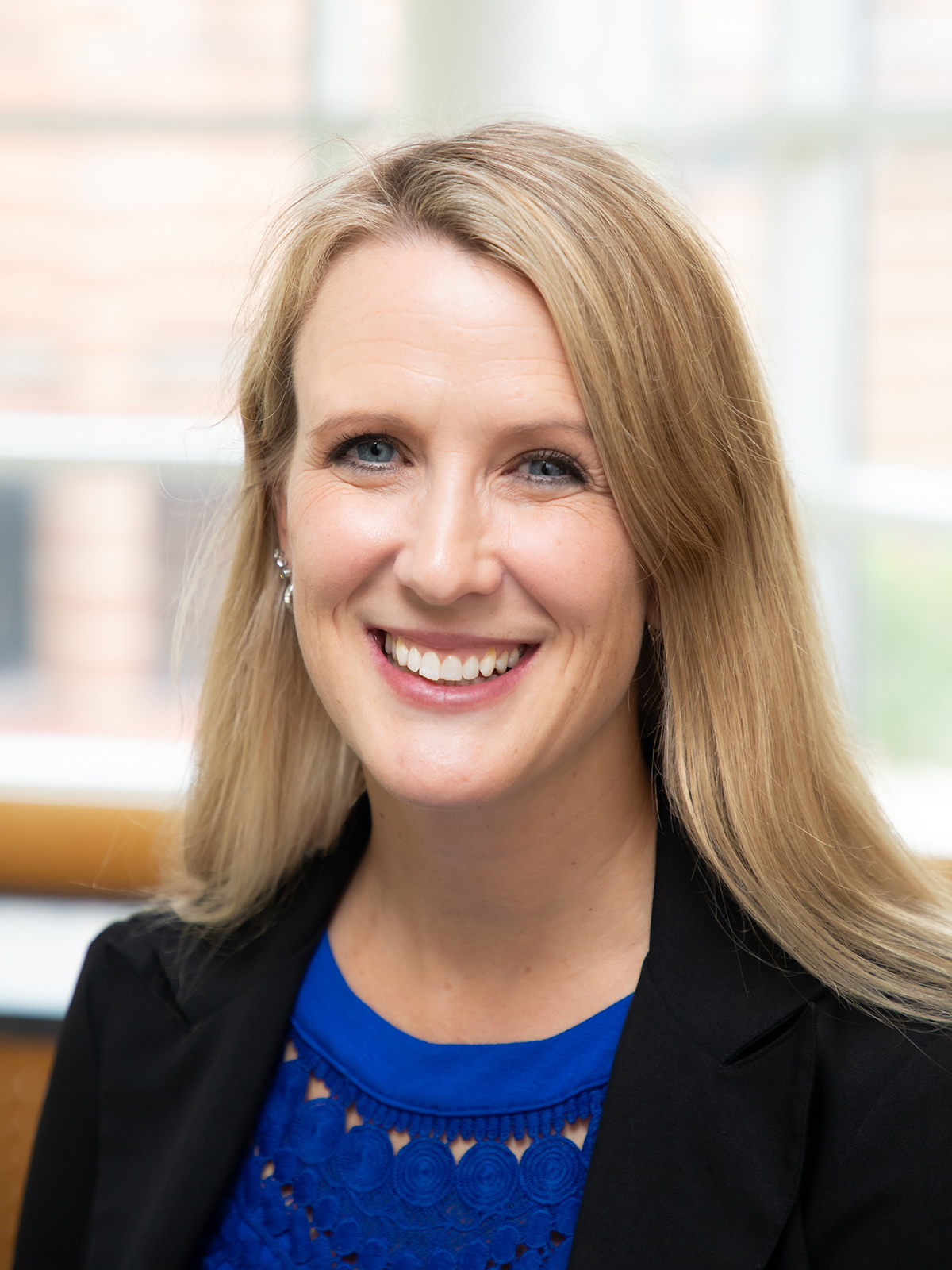
Within this structure, Fossum and Department of Education Chair Danielle DeFauw note that there will still be plenty of the individualized flavor that makes the current program so enjoyable for both students and faculty. However, DeFauw says that differentiation will now come from within courses, in the form of project-based work that gives students a chance to explore their particular interests, rather than differentiated curriculum tracks. (She notes this diversity also makes courses more enjoyable for faculty.) And Fossum points out that, unlike a traditional PhD program, the UM-Dearborn EdD actually expects students to define their own dissertation topics. “In the classic PhD program, you typically have a mentoring faculty member who’s gotten a big fat grant and needs some graduate-student minion to work on it. So the doctoral student does this, and the faculty member’s interest becomes the student’s interest. Ours doesn’t work that way,” Fossum says. For example, one of Fossum’s mentees just defended her dissertation on western Armenian heritage language teachers in U.S.-based Armenian schools. That’s not Fossum’s area of expertise. So he made sure she had a finely tuned dissertation committee, which included Vahe Sahakyan from UM-Dearborn’s Armenian Research Center, Professor of Linguistics Daniel Davis, and Shushan Karapetian, who directs the Institute of Armenian Studies at the University of Southern California. “This student did beautifully. I think Dr. Karapetian at USC, together with my CASL colleagues on the committee, were all truly impressed by this student’s work,” Fossum says. “And, from my standpoint, I learned so much. Other recent dissertation topics have included knitting in elementary classrooms as a catalyst for their social/emotional growth, the re-emergent benefit of ‘home room’ in secondary schools, faculty entrepreneurship in higher ed and the professional development needs of teachers of Native American Michiganders. The list goes on. And these are just a few of my own advisees’ topics. But our students all tend to be highly motivated and keep every one of us on our toes. Of course, that aspect puts a different kind of demand on a faculty member, but it can be — it has been — thoroughly enjoyable.”
DeFauw says one of her favorite features of the new program is a biennial symposium organized by the students, where they get to both present their work and learn from leaders in the field. “We’re still working out some of the details, but the idea is that they will come up with the idea/theme of the conference, they’d organize a call for conference proposals, and a team of students would review them, etc.,” DeFauw says. “The goal is to create an authentic opportunity of academic life, which involves sharing research.” Though the EdD program is all online, DeFauw says the symposium will be a hybrid event. She expects if students' lives allow for it, many will attend the symposium in person.
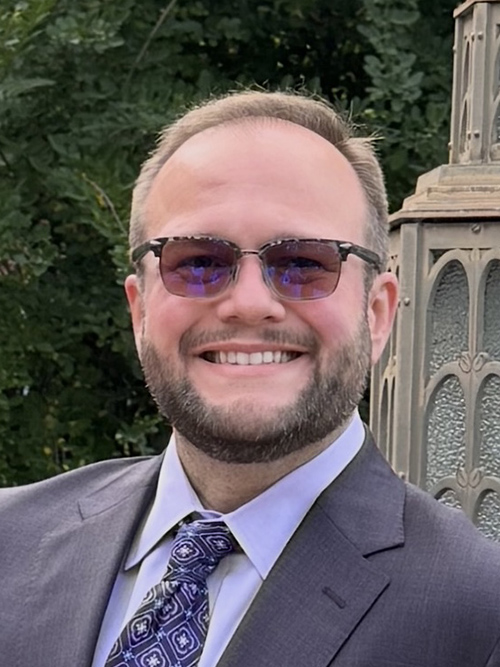
Assistant Professor of Policy and Educational Leadership Brian Boggs, who teaches most of the EdD leadership courses, notes that this retooling of the program is a good fit for the university’s mission and the types of students it aims to serve. He says that throughout the program's history, most EdD students have come from the world of K-12 education — and don’t quit their day jobs to study full time. “I’ve had students Zooming in for class and they’re clearly still at school, because maybe they just didn’t have enough time to drive home yet. Our students are almost exclusively working professionals,” Boggs says. He expects the all-online format will sharpen the appeal of the program among this demographic — plus expand its geographic reach, which he sees as a good way to serve the state and, ultimately, the students and families who benefit from public education. “Higher education has become more competitive. We’re living in a world in which students can now go anywhere to get an online degree or get a credential. But not all credentials are worth the same, and a University of Michigan degree means something,” Boggs says. “So if we want our education leaders to be trained within an academically rigorous environment, and they have multiple demands on their life, we have to be flexible. We have to be willing to change to meet them where they are.”
###
Story by Lou Blouin


