
Look to Michigan Impact Report
The University of Michigan-Dearborn is proud to serve as a catalyst for opportunity and innovation in the metro Detroit region. Our distinctive, practice-based approach to education—anchored in the tradition of the Block M—prepares students to excel while uplifting the communities around us. Through strong collaborations with local businesses, government agencies, and community organizations, we turn shared vision into meaningful results. In this impact report, we celebrate the extraordinary role your support plays in empowering our students and transforming both our campus and the wider community.
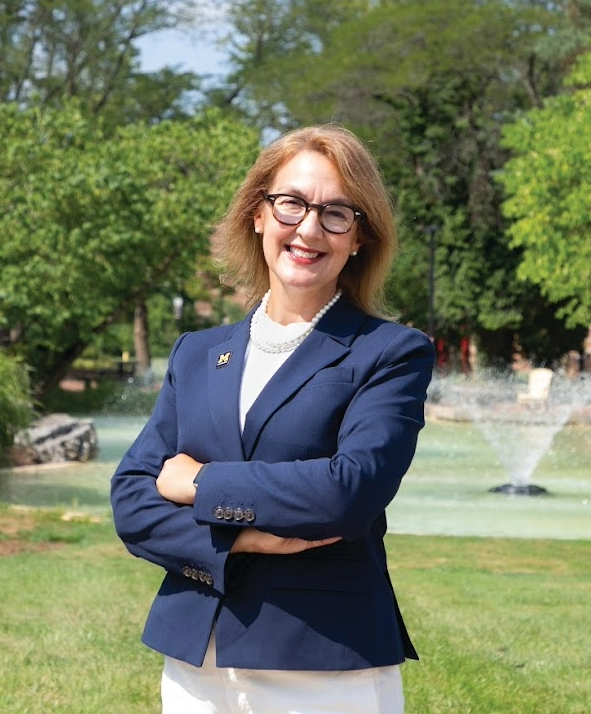
At UM-Dearborn, students from all backgrounds have access to a life-transforming, affordable education. Support from our donors is vital in driving innovation, enhancing practice-based learning and fostering an environment where every student can thrive. Together, we can make a profound impact for our students and communities.
Chancellor
How Your Gifts Support Our Students
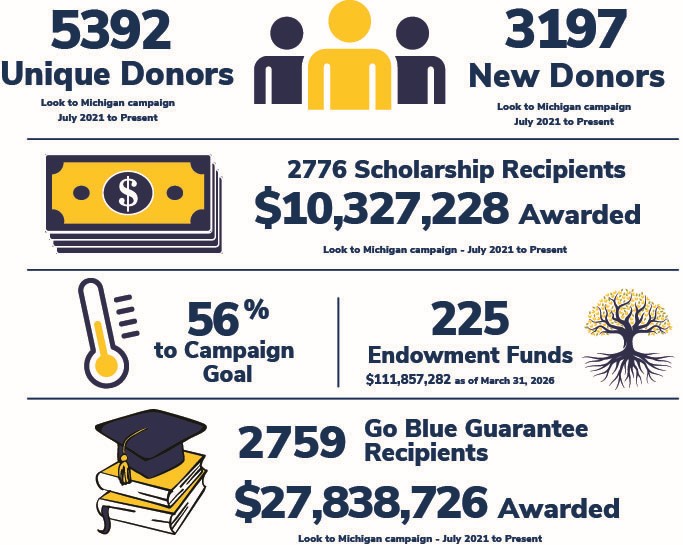

Impact Through Giving
 Magna International, a global mobility technology company with a major footprint in southeast Michigan, has become a top destination for UM-Dearborn co-op students and interns — many of whom have gone on to work full time at the company after graduation. Talent Attraction and Employer Brand Manager Heather Holm says that the tight relationship between the company and the university hasn’t happened by accident. Holm says Magna spends a lot of time recruiting on campus because their business depends on hiring top-level engineering talent, and they see UM-Dearborn students as some of the most prepared in the region — ready to hit the ground running once they enter the workforce. “It can be a tricky industry to get into, but I think with UM-Dearborn students, there’s a grit factor,” Holm says. “They’re finding those opportunities where they can gain hands-on experience, whether that’s in capstone programs like Senior Design or student organizations. And on our end, we need to get out there and promote our brand as a B2B organization. We’re a very complex, high-tech company and they can find a robust career with us.”
Magna sees philanthropy as an effective way to nurture the talent pipeline — and support the next generation of engineers, whether they ultimately land with the company or not. Over the past eight years, Magna has supported hands-on learning with contributions totaling more than half a million dollars to College of Engineering and Computer Science students, faculty, student engineering teams and organizations, as well as the Senior Design competition and universitywide programs like Talent Gateway. Holm says the company is also proud to support campus chapters of the National Society of Black Engineers, Society of Hispanic Professional Engineers and Society of Women Engineers, which help students from demographic groups historically underrepresented in engineering fields succeed. “We give a lot to student teams, like the formula racing teams or the rocketry team, but these other organizations focused on building that representation are also super important to us,” Holm says. “We look at this as a way to support groups that are bringing students together and creating spaces where they can find their confidence, meet people and find their networks. When we talk about growing talent, that’s critical to them and to us.”
 When Henry Maier started college in 1972, he viewed the Graham Nash song “Chicago” as an anthem for his generation, citing the lyrics: “We can change the world. Rearrange the world. It’s dying to get better.” Decades later, the retired FedEx Ground president and CEO still thinks about these words. “We, the Baby Boomers, were supposed to be the generation to make the world better. I fear, as we look back, we’ve only made things worse,” says Maier, who earned a Bachelor of Arts in economics in 1986. “I have hope these students will learn from my generation’s mistakes. I want to support them as they go out into the world.” Maier — a first-generation college student who worked three jobs while at UM-Dearborn — established the Henry and Diane Maier Endowed Scholarship Fund, which assists students demonstrating need. He’s committed more than $100,000 to the university. Maier is a member of the Chancellor’s National Advisory Council and was the Fall 2024 Commencement keynote speaker.
Maier, who had a 35-year career at FedEx, says UM-Dearborn gave him access to a Michigan degree at an affordable cost. He, along with wife Diane, want others to have that opportunity too. “Wouldn’t it be awful if the person who has the ability to cure cancer doesn’t because they couldn’t afford school?,” he asked. ”I’ve seen personally what a Michigan degree can do. I’ve been blessed. It’s my responsibility to give back.” It’s one way that Maier is living his anthem.
 Helen Van Tiem taught first grade for just two years before she left teaching to raise a family and start a life volunteering in local politics. But when her last of seven children was nearing high school graduation, she began a second act, earning a master’s in early childhood education from UM-Dearborn in 1984. Soon after graduation, she began working at the Child Development Center (known today as the Early Childhood Education Center), a novel preschool run by the university that also trains aspiring educators. There, Helen, who also served as a faculty member at UM-Dearborn, was moved by the perseverance of her teachers-in-training, who often held down part-time or full-time jobs to pay for school.
With this in mind, Helen and her husband, Thomas, established a scholarship fund to support aspiring early education teachers in the later years of their programs. Helen passed away in 2018, but Thomas continues to support the fund. “I worked my way through college, and I was the first one in my family to go to college, so I knew how difficult it was to stay in school,” Thomas says. “And Helen knew the struggle I had and knew the challenges her own students faced. So doing what we could just felt like the right thing.”
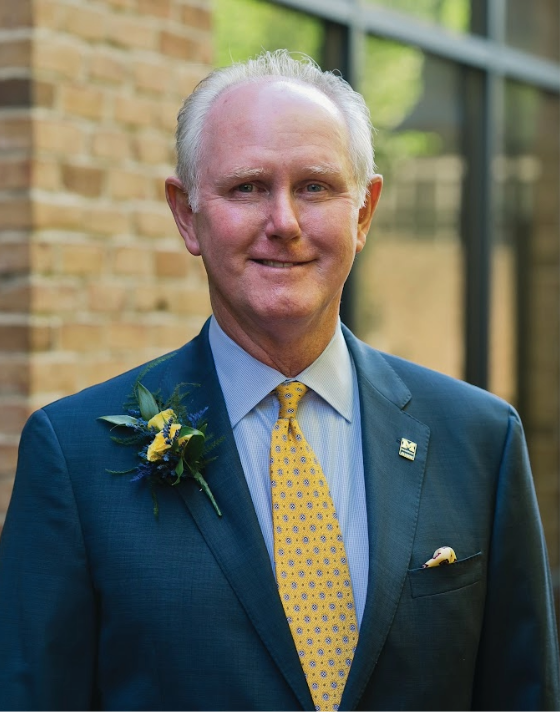 College of Business alum Kris Pfaehler has 40 years of experience leading sales and marketing teams. He’s traveled the globe representing manufacturing suppliers. After retiring as the executive vice president of Waupaca Foundry, a world-leading supplier in ironcasting, he started the consulting company Sand Dollar Global Advisors to help manufacturing companies succeed.
Pfaehler knows what success looks like and — as a first-generation college student who put himself through school by working — the 1977 BBA graduate knows what it takes. For example, to make ends meet, there was a time where he worked until 6 a.m. as a disc jockey at a classic rock station and was in class by 9 a.m. After graduating, he mentored entrepreneurship students, joined the College of Business Board of Advisors, and established — along with his wife, Ruth — the Kris and Ruth Pfaehler Endowed Scholarship. “Many UM-Dearborn students go to school and work full time like I did. I want to be the person who devotes time and counsel because that’s who I would have liked to have,” he says. Pfaehler was named UM-Dearborn’s Distinguished Alumnus of the Year in 2019.
Through COB, Pfaehler landed an internship at American Motors Corp. his junior year, which turned into a full-time position. Leveraging that experience, he later led teams at other manufacturing companies. “The College of Business opened doors and gave me a solid foundation,” he says. “I’ve had a great career and want to do what I can to help our students succeed.”
 For students interested in academic careers, participating in research and logging publications as an undergrad can help them stand out when applying to grad schools. But for students interested in going into industry, scoring a patent packs way more punch when it comes to impressing employers, says Clinical Professor of Industrial and Manufacturing Systems Engineering Practice Kas Kasravi. Interestingly, however, Kasravi says helping students patent their innovations hasn’t been something universities have traditionally focused on. UM-Dearborn’s new Henry W. Patton Entrepreneurship, Practice and Innovation Center, or EPIC, is hoping to change that. With philanthropic support from the Song Foundation, EPIC is now debuting a slate of guidance focused on promoting student-owned patents that support entrepreneurship and startup companies.
This year, Kasravi, who serves as EPIC director, says the center launched an Intellectual Property Clinic, which guides students with patentable ideas and inventions through the complex federal patent application process, answering their questions along the way. About a dozen students who’ve participated in the clinic have already successfully filed provisional patent applications — and four of Kasravi’s students who helped inspire the EPIC approach were recently granted a patent by the U.S. Patent and Trademark Office. This coming year, EPIC plans to expand its student patentfocused
clinic to UM-Dearborn’s Senior Design program. “There, you have 45-50 projects from student teams. Some of the work coming out of that program is potentially patentable, and the students will now have the support to pursue patent applications.” Kasravi says.
 As a child, Eric Nemeth’s backyard had a view of Zug Island smokestacks. Living in a home with his parents and grandparents, Eric (’85 BA), learned a lot from growing up in Southwest Detroit — and it helped put him on the path to success. “I cherish my upbringing in Delray now, but it was tough,” says Eric, who majored in economics and political science. “When you are young and live in challenging circumstances, you don’t think twice about taking on added responsibilities. The tools you gain are very useful later on. Many students at UM-Dearborn come from similar circumstances and I know that they have what it takes too.”
That grit — along with experience gained through the Ottawa Political Internship program and connections made at UM-Dearborn — helped lead Eric to a career in the Michigan State Senate as a district representative by age 22. He then went to law school and worked his way to becoming a tax attorney and partner at Varnum Law in Novi.
Knowing how UM-Dearborn can change the trajectory of people’s lives, Eric and wife Paula, (’85 BA, teaching certificate) are long-time supporters of the university, where they met. They established multiple scholarships and host UM-Dearborn alumni events. Eric mentors students interested in law and has served in many leadership positions, including co-chair for the Victors for Michigan Campaign and member of the CASL Dean’s Advisory Board. “People are born into circumstances they are born into. It doesn’t mean they need to stay there,” he says. “If someone wants to discover their potential through education, we want to help them do that.”
Ideas in Action
Practice-Based Learning (PBL) at UM-Dearborn encompasses both curricular and co-curricular experiences where students are required to apply, analyze, evaluate or create knowledge, often through collaboration and across disciplinary boundaries. A primary aim of PBL is to foster a deeper understanding of core concepts by applying them to student-centered projects that address complex, authentic problems, thereby allowing students to learn from real-world consequences, mistakes and successes.
PBL aims to deepen understanding through application, build professional skills, and strengthen connections. This method is crucial for knowledge and skill development, effectively preparing students for future employment, entrepreneurship or graduate studies. Beyond academics, PBL plays a vital role in fostering a sense of belonging and connectedness on campus, particularly for non-traditional and first-generation students, by engaging them with faculty, peers and the broader community.
All colleges within UM-Dearborn actively integrate PBL to provide informative and engaging classroom experiences that translate directly to real-world applications. Additionally, programs like the Summer Undergraduate Research Experience (SURE) exemplify experiential learning within the PBL framework, guiding undergraduate students in research and exposing them to potential career paths through faculty mentorship.
UM-Dearborn has earned a Research 2 (R2) designation from the Carnegie Foundation for the Advancement of Teaching and the American Council on Education, signifying “high spending and doctorate production” and marking the first time the university has received this honor. This significant recognition follows six years of rapid growth, during which externally funded research spending at UM-Dearborn has nearly tripled, from $4.8 million in 2018 to a projected $13.2 million for FY25.
The achievement stems from a shift in prioritization by former Chancellor Domenico Grasso, who made growing research a top priority for the university, coupled with increased investments in research development and faculty support. The university’s research enterprise has expanded its scope, with significant growth in engineering and growing momentum in the natural sciences, computer science, artificial intelligence (AI), and health and human services, aligning with UM-Dearborn’s explicit mission to support diverse sectors of the economy.
This R2 status is seen as a crucial tool for recruiting and retaining top faculty, signaling to ambitious scholars that UM-Dearborn offers the resources and vision necessary to build strong research programs and continue its upward trajectory.
UM-Dearborn demonstrates its deep commitment to student success through efforts to encourage students who have stopped out to complete their degrees and to enhance student support systems, such as Experience+, SOAR, Wolverines@Work, and FlexAid Scholarships. A primary goal for student learning is the development of knowledge and skills, alongside fostering a sense of belonging and connectedness on campus, which is crucial for student success and retention, especially among non-traditional and first-generation students.
The Office of Academic Success offers a wealth of resources, including personalized academic advising, various learning centers (e.g., Math, Science, Writing), Career Services, and specialized programming tailored to diverse student populations, such as first-generation students and those with disabilities. Opportunities for experiential learning are also available through initiatives like the Summer Undergraduate Research Experience (SURE) program, which guides undergraduate students in research and exposes them to potential career paths through faculty mentorship. These comprehensive efforts contribute to significant student achievements, including victories in senior design competitions and successful career placements.