
Closing the Loop
The whole purpose of assessment is to guide us in making improvements to support students’ learning of program goals. We call these improvement strategies “closing the loop” actions.
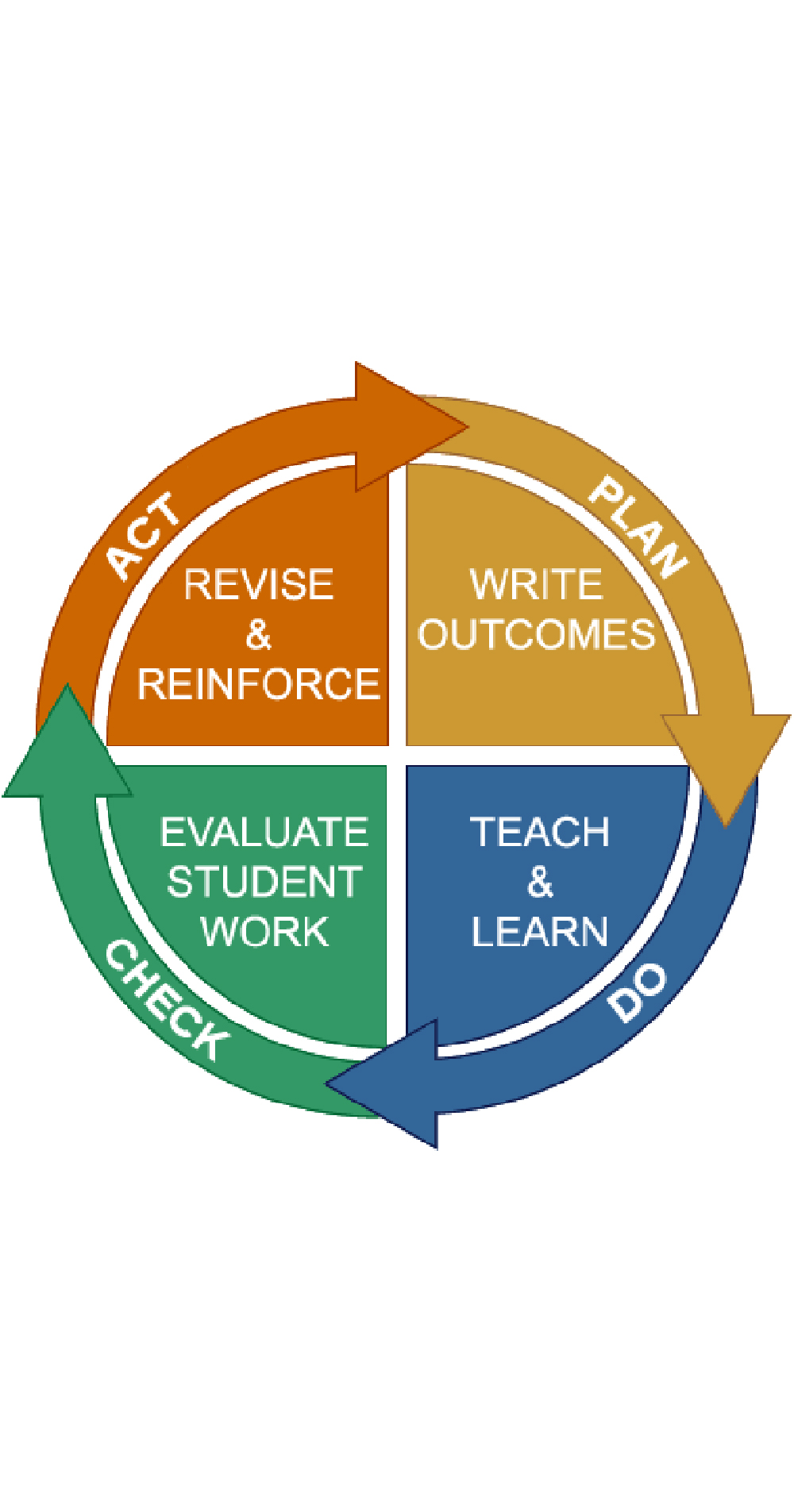
Planning involves writing outcomes considering: What do I want students to learn?
Doing is teaching and learning considering: How do I teach effectively?
Checking is evaluating student work considering: Are my outcomes being met?
Acting is revising and reinforcing considering: How do I use what I have learned?
Image credit and above text modified from Westminister College - The Assessment Cycle.
Closing the Loop Strategies
When your program’s assessment results are good, faculty should:
Celebrate! Reward! Share! Keep Going!
When your assessment findings reveal weaknesses, consider the following:
- Do you have the right learning goals? Do you have too many learning goals?
- Do you need to improve your assessment methods?
- Take a hard look at your curriculum:
1) Course content and requirements
2) Program goals and requirements
3) Sequencing and prerequisites
4) Teaching methods and existing assignments
5) Faculty/staffing support
6) Admissions criteria
7) Placement criteria
8) Advising
9) Tutoring
10) Co-curricular activities - Develop concrete plans for implementation of changes. Develop a reasonable timeline, usually multi-year.
- Develop a plan to assess (measure) the impact of those changes.
- Sometimes it really is the students’ fault.
- Keep going!
From Linda Suskie, Assessing Student Learning: A Common Sense Guide (Jossey Bass, 2009)