
Programs for School Groups
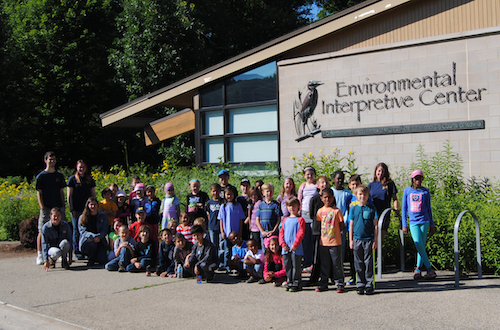
Science, Nature, and Sustainability...Outdoors!
The EIC provides interdisciplinary, inquiry-based educational programs for Pre-K–12 schools and community groups across Southeastern Michigan. Designed to align with Michigan K-12 and Next Generation Science Standards, these programs utilize the 120-acre Environmental Study Area, onsite classrooms, and specialized teaching laboratories.
Through these immersive outdoor and lab experiences, students engage directly with nature while developing critical thinking skills related to regional ecology and sustainability.
*Length of all programs can be adapted to fit the teacher's needs.*
| Program | Grade | Season | Descriptions |
|---|---|---|---|
| Maple Syrup Science | Pre K- 12 | March | Explore the process of how Maple sap is taken from trees to create syrup, and taste the final result! |
| Plant Identification & Ecology | 3-12 | year-round | Explore a forest community using the tools and concepts of plant identification, classification and ecology. |
| Pollination Partnerships | 3-8 | May- mid October | Explore the fascinating adaptations and interconnections among flowering plants and their insect pollinators through observation, and identifications. |
| Pond Explorations | K-12 | late- April to late- October | Hands-on exploration of an aquatic environment, introduces students to concepts of metamorphosis, adaptations, and ecological interactions. |
| Seasonal Nature Explorations | Pre K-8 | year-round | Participants to explore natural habitats and to discover how different plants and animals respond to the seasons. |
| Trip of a Drip | 5-12 | year-round | Explore the concept of a watershed and explores the interconnections between human activity, watershed health, and the plant and animal communities in the Rouge River watershed. |
| Understanding Insects & Spiders | 3-12 | June- October | Capture and release of live insects and spiders in their natural habitats and connect their findings to ecological terms and concepts such as adaptation, biological diversity, indications of habitat health, and insect biomass. |
General program information
All visitors can park at the designated C lots adjacent to the structure. Please park all school buses that are not actively dropping off students to the back of C lot.
- Programs for school groups are $3/student for single programs and $5/student for double programs, teachers and chaperones are free of charge.
- Please pay for programs no later than one week prior to attending your field trip.
- Payments are non-refundable. If programs are cancelled due to weather we will try and reschedule your group.
- Payment via eStore for all programs.
- Contact [email protected] or call 313-593-5376 if you need additional support.
- If adverse weather is expected we will reach out to the registered program contacts.
- We hold field trips in most weather conditions, but will reschedule in the event of severe weather.
- Please have students and chaperones dress accordingly for expected weather conditions.


