
Community Read
Community Read is a program of the Faculty Senate's First Year Experience Committee (co-chairs Michael MacDonald and Anne Dempsey Moussa), similar to NEA's Big Read, to consider vital topics across disciplines.
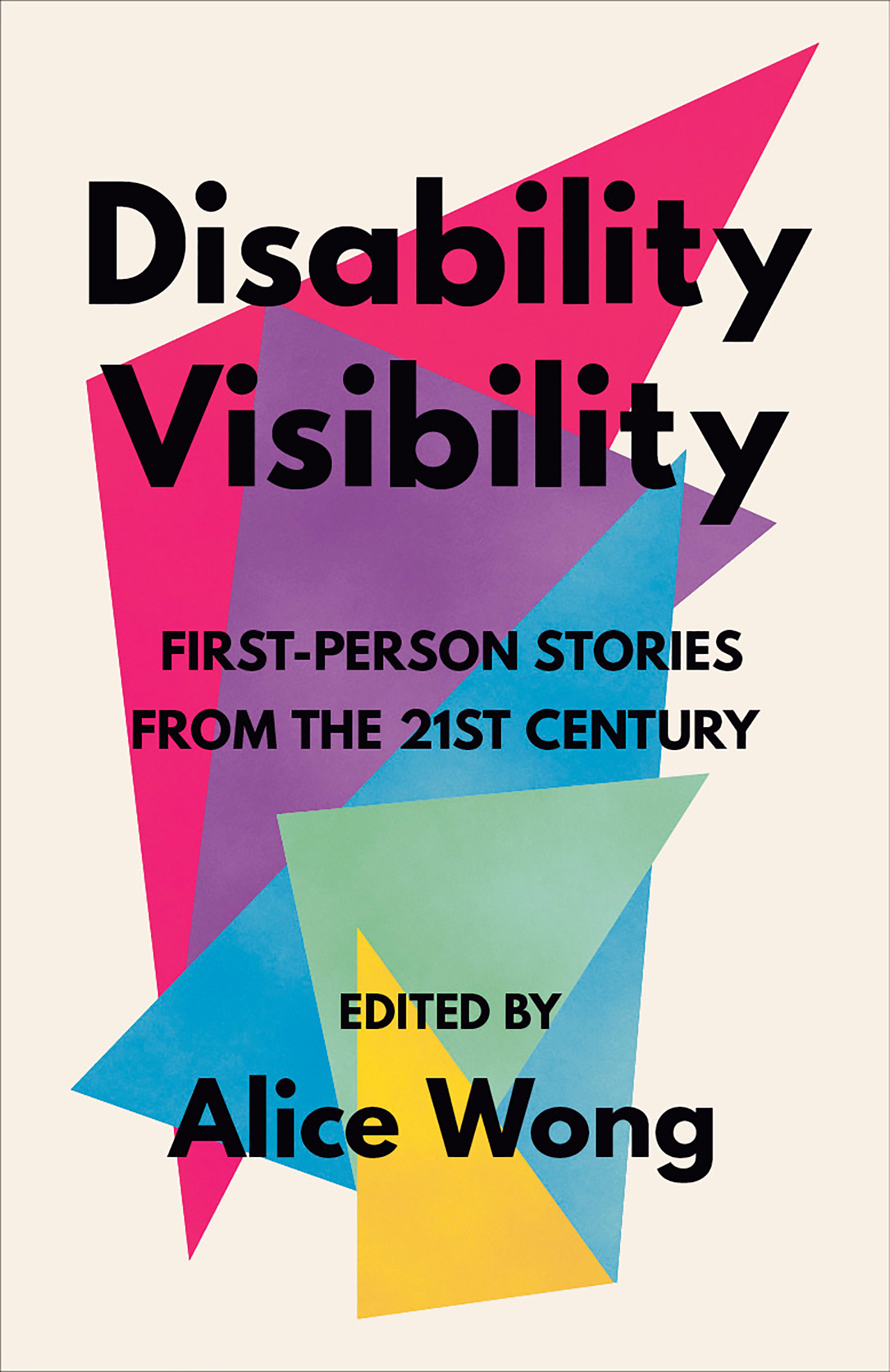
We are pleased to announce our Community Read selection for the 2026-2027 academic year: Disability Visibility: First-Person Stories from the Twenty-First Century edited by the late Alice Wong, a writer and advocate for disability justice. The book is a collection of diverse stories on living with disability that humanize the experiences of people often rendered invisible by society’s exclusionary conventions.
These stories help us place federal digital accessibility requirements within larger conversations about disability justice, as we imagine what access to a university education looks like. The book also helps us highlight work on accessibility, disability, technology, and education already occurring on our campus, in research, teaching, and campus planning. UM-Dearborn’s Commitment to Students with Disabilities and this reflection on a SURE project in CECS are just two examples.
Disability Visibility is available to read in e-book form through the Mardigian Library. The book's chapters cover a wide range of perspectives and could be assigned in many disciplines. The Disability Visibility Project website also offers supplemental resources. To request a personal physical copy or e-book, please ask Librarian Holly Sorscher ([email protected]) or email: [email protected] Physical copies were generously funded by the Hub for Teaching and Learning and the Mardigian Library.
Please reach out to any FYE Committee member with your suggestions or questions. We welcome your ideas for engaging and informative programming throughout the upcoming year: [email protected]
____________________________________________________________________________
The selection for 2025-2026 is Braiding Sweetgrass: Indigenous Wisdom, Scientific Knowledge and the Teachings of Plants, by Robin Wall Kimmerer. The book celebrates the more-than-human communities of care to which we belong. Kimmerer, botanist and enrolled member of the Citizen Potawatomi Nation, explores how Indigenous ways of knowing can transform our relationships to the land, in gardening, parenting, and scientific practice. This reading aligns with new initiatives from the Office of Holistic Excellence (OHE) and an Inclusive History Project at the Environmental Interpretive Center (EIC).
Our Community Read for 2024-2025 was Verified: How to Think Straight, Get Duped Less, and Make Better Decisions About What to Believe Online, by Mike Caulfield and Sam Wineburg, 2023. Verified offers evidence-based strategies for navigating text, images, and videos--skills crucial with increased use of AI images and text. The book offers two methods, lateral reading and SIFT, plus techniques for Google search, videos, TikTok, and advertising.
Our reading for 2023-2024 was Hadha Baladuna: Arab American Narratives of Boundary and Belonging, by Ghassan Zeineddine, Nabeel Abraham, and Sally Howell, named by the Library of Michigan as a 2023 Michigan Notable Book.
In 2022-2023, we read All We Can Save, 60 essays and poems on the climate crisis, edited by Ayana Elizabeth Johnson and Katharine K. Wilkinson, of the All We Can Save Project.
In 2021-2022 we read William D. Lopez's Separated: Family and Community in the Aftermath of an Immigration Raid, tracing economic, social, and health fallout from a 2013 ICE raid in Washtenaw County, Michigan. Dr. Lopez is associate professor at the UM School of Public Health; his recent book is Raiding the Heartland.
Our 2020-2021 book was How to Be an Antiracist, by Ibram X. Kendi. Faculty members created videos on book chapters for class use, now on the UM YouTube playlist, and Mardigian Library posted antiracism resources. Kendi's new book is Chain of Ideas: The Origins of Our Authoritarian Age.
Our first selection, 2019-2020, was Rebecca Skloot's The Immortal Life of Henrietta Lacks, the woman whose famed HeLa cells underlie countless medical breakthroughs.
- Alicia Schaeffer: Academic Affairs: CASL Composition & Rhetoric (Term expires 08/31/2029)
- Anne Dempsey Moussa, Academic Affairs: Student Engagement Librarian, Mardigian Library (Term expires 08/31/2027)
- Kristin Poling: Academic Affairs: CASL History (Term expires 08/31/2027)
- Tian An Wong: Academic Affairs: CASL Mathematics (Term expires 08/31/2026)
- Amanda Esquivel: Academic Affairs: CECS (Term expires 08/31/2029)
- Natalie Sampson, Academic Affairs: CEHHS Environmental Health (Term expires 08/31/2026)
- Jennifer Coon, Academic Affairs: COB (Term expires 08/31/2029)
- Nicholas Iannarino, Academic Affairs: CASL Communication (Term expires 08/31/2029)
- Lynda Dioszegi, Student Affairs, Senior Advisor, START, ex officio
- Amy Finley, Student Affairs: Dean of Students, ex officio
- Rory Chumney, Student Affairs: Program Coordinator, Student Life, ex officio
- Kevin Lewtschanyn, Enrollment Management: Director of EM Communication and Events, ex officio
- Da'ud Ismail, Student Government President, ex officio (through April 30, 2027)
Monday, October 6, 11:00 AM to 12:30 PM, EIC:
Chancellor Gabriella Scarlatta led a discussion of this year’s Community Read, Braiding Sweetgrass: Indigenous Wisdom, Scientific Knowledge and the Teachings of Plants.
Light refreshments served.
Complimentary copies of Braiding Sweetgrass were made available to faculty, staff and students through the Mardigian Library.
Friday, April 3, 10:30 am to 2:00 pm, ALC, 1212 Mardigian:
Land of the Three Fires, Learning Anishnabe ecology through gaming. Active workshop with morning coffee and light lunch provided.
- Free Copy of Verified & Faculty Grants
Free copies of the year's book and small faculty grants were made available through the FYE Committee. - Workshop: Teaching with Verified, September 23, 1-2:30pm, Mardigian Library 1211
Faculty learned about Verified, SIFT and lateral reading methods, specific assignments that our faculty are already using and, and how these methods might connect to their own class objectives and assignments. Truth Be Told! Verified Game Show, October 9, 2:30-4pm, RUC Kochoff C
Mixed teams of students, faculty, and staff faced off to debunk falsehoods in a game show-style competition, hosted by the College of Business and inspired by Verified--a fun and engaging game of Truth Be Told.
Chat With the Chancellor! Monday, November 18, 10:30-11:30am, RUC Kochoff A & B
Discussion of Verified with Chancellor Domenico Grasso. Free copies of Verified available at the Mardigian Library main desk. The discussion was based on Chapters 1 & 2. This event for students, faculty, and staff was sponsored by the Honors Program Student Organization.
- Teaching Workshop for Faculty, Thursday, May 25, 2023, 2:00 pm, Virtual: Zoom
- Faculty Small Grants Program, through April 2024
- Authors' Discussion, Thursday, November 9, 2023, 4:00 to 5:30 pm, Mardigian
- Wikipedia Edit-a-Thon, Arab American Authors, April 11, 5:50-7:30, Mardigian
October 14 and 15th: Students planted trees with the Wildlife Habitat Council, Friends of the Rouge and National Fish and Wildlife Service.
October 28, 9:00 am to 1:00 pm: Dearborn-SHINES schoolyard garden project. Student volunteer activities included weeding, painting, spreading mulch, and topping soil at selected Dearborn Public Schools.
November 10, 7:00-8:30 pm: Film and Panel Discussion: In the Land of Palm Oil. This virtual webinar was organized by Palm to Palm: a student-led, tri-campus initiative dedicated to ending exploitation of humans and wildlife in tropical regions. Panelists included: Emmanuela Shinta (Indonesian social activist), Denise Dragiewicz (film director), Jocelyn Zuckerman (author, Planet Palm: How Palm Oil Ended Up in Everything―and Endangered the World), Dr. Anne Russon (York U psychologist and primatologist), and Dr. Andrew J Marshall (UM anthropologist and primatologist).
November 17, 7:00-8:30pm: Virtual webinar panel discussion on the revival of the River Rouge, sponsored by the Environmental Interpretive Center and the Friends of the Rouge. Panelists included: Orin Gelderloos - Professor Emeritus of Biology and Environmental Studies, UM-Dearborn, John Hartig - Visiting Scholar, University of Windsor's Great Lakes Institute for Environmental Research, Sally Petrella - Monitoring Manager, Friends of the Rouge, and Cyndi Ross - Restoration Manager, Friends of the Rouge.