
Dearborn Campus Asbestos Management Plan
General
What is Asbestos?
Asbestos is the name applied to six naturally occurring minerals that are mined from the earth. The different types of asbestos are:
- Chrysotile
- Amosite
- Crocidolite
- Tremolite
- Anthophyllite
- Actinolite
Of these six, three are used more commonly. Chrysotile (white) is the most common, but it is not unusual to encounter Amosite (brown / off-white) or Crocidolite (blue) as well.
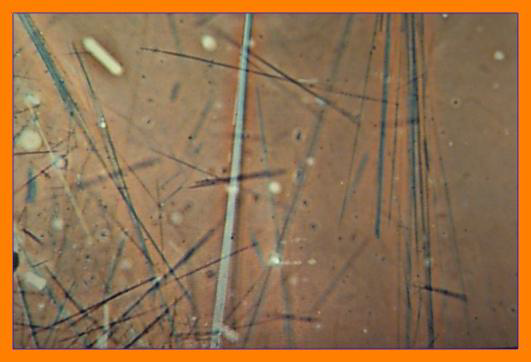
All types of asbestos tend to break into very tiny fibers. These individual fibers are so small that many must be identified using a microscope. In fact, some individual fibers may be up to 700 times smaller than a human hair. Because asbestos fibers are so small, once released into the air, they may stay suspended there for hours or even days.
Asbestos fibers are also virtually indestructible. They are resistant to chemicals and heat, and they are very stable in the environment. They do not evaporate into air or dissolve in water, and they are not broken down over time. Asbestos is probably the best insulator known to man. Because asbestos has so many useful properties, it has been used in over 3,000 different products.
Usually asbestos is mixed with other materials to actually form the products. Floor tiles, for example, may contain only a small percentage of asbestos. Depending on what the product is, the amount of asbestos in asbestos containing materials (ACM) may vary from 1%-100%.
Where is Asbestos Found?
Asbestos may be found in many different products and many different places. Examples of products that might contain asbestos are:
- Sprayed-on fire proofing and insulation in buildings
- Insulation for pipes and boilers
- Wall and ceiling insulation
- Ceiling tiles
- Floor tiles
- Putties, caulks, and cements (such as in chemical carrying cement pipes)
- Roofing shingles, felt, tar, flashing
- Siding shingles on old residential buildings
- Wall and ceiling texture in older buildings and homes
- Drywall, drywall tape, plaster
- Joint compound in older buildings and homes
- Brake linings and clutch pads
At UM-Dearborn, asbestos may likely be found in a number of materials, including but not limited to the following:
- Sprayed-on insulation in locations such as various mechanical rooms, steel reinforcing beams, and some ceilings in older buildings
- Ceiling tiles in buildings built prior to 1981
- Most 9" floor tiles in buildings built prior to 1981
- A few 12" floor tiles in buildings built prior to 1981
- Insulation around pipes and boilers, and
- Interiors of fire doors
When is Asbestos Dangerous?
The most common way for asbestos fibers to enter the body is through breathing. In fact, asbestos-containing material is not generally considered to be harmful unless it is releasing dust or fibers into the air where they can be inhaled or ingested. Many of the fibers will become trapped in the mucous membranes of the nose and throat where they can then be removed, but some may pass deep into the lungs, or, if swallowed, into the digestive tract. Once they are trapped in the body, the fibers can cause health problems.
Asbestos is most hazardous when it is friable. The term "friable" means that the asbestos is easily crumbled by hand, releasing fibers into the air. Sprayed-on asbestos insulation is highly friable. Asbestos floor tile is not.
Asbestos-containing ceiling tiles, floor tiles, undamaged laboratory cabinet tops, shingles, fire doors, siding shingles, etc. will not release asbestos fibers unless they are disturbed or damaged in some way. If an asbestos ceiling tile is drilled or broken, for example, it may release fibers into the air. If it is left alone and not disturbed, it will not. 3
Damage and deterioration will increase the friability of asbestos-containing materials. Water damage, continual vibration, aging, and physical impact such as drilling, grinding, buffing, cutting, sawing, or striking can break the materials down making fiber release more likely.
Health Effects
Because it is so hard to destroy asbestos fibers, the body cannot break them down or remove them once they are lodged in lung or body tissues. They remain in place where they can cause disease.
There are three primary diseases associated with asbestos exposure:
- Asbestosis
- Lung Cancer
- Mesothelioma
Asbestosis
Asbestosis is a serious, chronic, non-cancerous respiratory disease. Inhaled asbestos fibers aggravate lung tissues, which causes them to scar. Symptoms of asbestosis include shortness of breath and a dry crackling sound in the lungs while inhaling. In its advanced stages, the disease may cause cardiac failure.
There is no effective treatment for asbestosis; the disease is usually disabling or fatal. The risk of asbestosis is minimal for those who do not work with asbestos; the disease is rarely caused by neighborhood or family exposure. Those who renovate or demolish buildings that contain asbestos may be at significant risk, depending on the nature of the exposure and precautions taken.
Lung Cancer
Lung cancer causes the largest number of deaths related to asbestos exposure. The incidence of lung cancer in people who are directly involved in the mining, milling, manufacturing and use of asbestos and its products is much higher than in the general population. The most common symptoms of lung cancer are coughing and a change in breathing. Other symptoms include shortness of breath, persistent chest pains, hoarseness, and anemia.
People who have been exposed to asbestos and are also exposed to some other carcinogen -- such as cigarette smoke -- have a significantly greater risk of developing lung cancer than people who have only been exposed to asbestos. One study found that asbestos workers who smoke are about 90 times more likely to develop lung cancer than people who neither smoke nor have been exposed to asbestos. 4
Mesothelioma
Mesothelioma is a rare form of cancer which most often occurs in the thin membrane lining of the lungs, chest, abdomen, and (rarely) heart. About 200 cases are diagnosed each year in the United States. Virtually all cases of mesothelioma are linked with asbestos exposure.
Other Cancers
Evidence suggests that cancers in the esophagus, larynx, oral cavity, stomach, colon and kidney may be caused by ingesting asbestos. For more information on asbestos-related cancers, contact your local chapter of the American Cancer Society.
Determining Factors
Three things seem to determine your likelihood of developing one of these asbestos related diseases:
- The amount and duration of exposure - the more you are exposed to asbestos and the more fibers that enter your body, the more likely you are to develop asbestos related problems. While there is no "safe level" of asbestos exposure, people who are exposed more frequently over a long period of time are more at risk.
- Whether or not you smoke - if you smoke and you have been exposed to asbestos, you are far more likely to develop lung cancer than someone who does not smoke and who has not been exposed to asbestos. If you work with asbestos or have been exposed to it, the first thing you should do to reduce your chances of developing cancer is to stop smoking.
- Age - cases of mesothelioma have occurred in the children of asbestos workers whose only exposures were from the dust brought home on the clothing of family members who worked with asbestos. The younger people are when they inhale asbestos, the more likely they are to develop mesothelioma. This is why enormous efforts are being made to prevent school children from being exposed.
How to Avoid Asbestos Exposure
In order to avoid being exposed to asbestos, you must be aware of the locations it is likely to be found. If you do not know whether something is asbestos or not, assume that it is until it is verified otherwise. Remember that you cannot tell if floor or ceiling tiles contain asbestos just by looking at them.
If you need to have materials analyzed or tested for asbestos, please contact the Office of Environmental Health and Safety & Emergency Management (EHSEM) at 3-4914 to make arrangements for sampling and analysis. Never try to take a sample yourself. 5
If you have reason to suspect that something is asbestos, either because it is labeled as such, or because it is something that is likely to contain asbestos (9" floor tile, for example) DO NOT DISTURB IT.
Never...
- Drill
- Break
- Hammer
- Damage
- Cut
- Move
- Saw
- Disturb
...any asbestos-containing materials or suspected materials.
Housekeeping
Housekeepers and custodians should never sand, strip, or dry buff floors that could be asbestos floor tiles unless using a wet method. A soft, non-abrasive pad should be used, and the machine should be run at a low speed below 300 rpm.
Broken and fallen ceiling tiles should be left in place until identified. Only after they have been identified as non-ACM may they be removed. ACM tiles will be removed by asbestos abatement workers.
Broken and damaged asbestos floor tiles must also be removed by asbestos abatement workers. Report any suspect broken tiles to EHSEM at 3-4914.
Damaged Material
It is important to report any damaged asbestos-containing materials to EHSEM at 3-4914 immediately. If, for example, you discover that some sprayed-on asbestos insulation has been knocked off of a ceiling or wall it would need to be cleaned up immediately by asbestos abatement workers. Do not attempt to clean up yourself! Also report any damaged pipe insulation, ceiling tile, 9" floor tile, fallen clumps of sprayed-on insulation, etc. Take measures to prevent others from disturbing the spill until the University of Michigan - Ann Arbor qualified Plant Staff arrives.
By knowing where asbestos is likely to be located and then taking measures not to disturb it, you will protect yourself and others from exposure to this hazardous substance.
University Practices
University of Michigan UM – Dearborn is committed to ensuring that asbestos is managed in a safe and appropriate manner which will protect students, staff and the environment. The intent of this section of the Asbestos Management Program is to provide written guidelines that allow for the proper maintenance of asbestos within University buildings in accordance with all applicable Federal and Michigan State regulatory standards.
Due to the complexities of the asbestos regulatory standards, it is the policy of UM – Dearborn not to conduct any disturbance to asbestos by University employees. If staff needs to determine if a given material is ACM or find damaged suspect ACM, they shall contact EHSEM at 3-4914.
Asbestos Education & Training
The importance of asbestos awareness training for custodial and maintenance personnel cannot be overstated. In fact, the applicable regulatory agencies require this training for not only the above-noted support staff but also all outside contractor employees who enter buildings containing asbestos-containing material (ACM).
The UM – Dearborn has instituted the following practices in order to ensure that all applicable staff and outside contractors have the proper training in accordance with regulatory standards.
Asbestos Awareness Training
All UM – Dearborn staff that conduct custodial or maintenance activities within University buildings shall have Two Hour Asbestos Awareness Training in accordance with the OSHA Asbestos Construction Standard.
Furthermore, all outside contractor employees who work in University buildings shall also be expected to obtain Asbestos Awareness Training. This shall be the responsibility of the outside contractor to provide their own employees with this training and not the University.
The training must include, but not be limited to the following topics: 7
- Information regarding asbestos and its various uses and forms
- Information on the health effects associated with asbestos exposure
- Locations of ACM identified within buildings in which they work
- Recognition of damage, deterioration and delaminating of ACM
- Name and telephone number of the University designated asbestos administrator
Pursuant to the OSHA Asbestos Construction Standard, all University staff and outside contractor employees who are provided the Asbestos Awareness Training shall have annual asbestos refresher training.
This training, which may be conducted by qualified in-house University staff or an outside environmental consulting firm, is structured for informational purposes only. Under no circumstances shall University staff or outside contractor employees who have this training disturb asbestos at any time.
Asbestos Accredited Training
In accordance with Michigan Public Act 440 of 1988, certain asbestos job disciplines require specialized training and Michigan State accreditation. The following is a list of these job disciplines and a brief description based on work practices:
- Inspector Training: Required for all persons who conduct bulk sampling or asbestos inspections in accordance with applicable regulatory requirements.
- Project Designer Training: Required for all persons who develop written project specification for asbestos abatement activities.
- Contractor & Supervisor Training: Required for all individuals who act as Competent Persons on asbestos abatement projects in accordance with the OSHA Asbestos Construction Standard.
- Asbestos Worker Training: Required for all persons who conduct asbestos abatement activities.
Only persons who have proof of the above noted training and accreditation, in accordance with Michigan Public Act 440 of 1988, shall conduct the identified asbestos-related work activities within University buildings.
Staff/Community Outreach Training
UM – Dearborn may, at its discretion, make available asbestos educational seminars to University staff or community organizations. The intent of these seminars will be to provide general information regarding asbestos and to address regulatory compliance 8
issues that affect the University. EHSEM and representatives shall be prepared to customize these seminars to meet the needs and concerns of the expected participants.
Asbestos Inspections
UM – Dearborn has been conducting in-depth asbestos inspections of University buildings constructed prior to 1981. The intent of these inspections is to locate ACM within these facilities and provides staff with the applicable information. Results of these inspections can be obtained from EHSEM.
The University will continue to conduct these ACM inspections as funding becomes available.
Outsourced Firms
It is the present policy of the UM – Dearborn that all asbestos abatement activities and disturbances be conducted by either outside contractors or trained and qualified U of M – Ann Arbor Plant staff. Furthermore, UM – Dearborn shall utilize the services of a qualified environmental consulting firm to conduct asbestos training, consultation, inspections and asbestos abatement oversight. This section details the UM – Dearborn expectations for these outside firms.
Licensed Asbestos Abatement Contractors
All outside contractors who conduct any asbestos disturbances or asbestos abatement activities within University buildings shall be licensed in accordance with Michigan Public Act 135 of 1986. Furthermore, the UM – Dearborn may determine to utilize only those Michigan Licensed Asbestos Abatement Contractors that are identified on the pre-approved listing prepared by the UM – Ann Arbor Department of Occupational Safety & Environmental Health (OSEH).
In the event that the UM – Dearborn selects a Michigan Licensed Asbestos Abatement Contractor that is not pre-approved by OSEH, the following minimum requirements by the contractor shall be met:
- Provide documentation of current asbestos abatement contractor license;
- Provide company Vitae that includes a minimum of five years of asbestos abatement project experience;
- Provide documentation of employee training for Contractor/Supervisor and/or asbestos worker;
- Appropriate general liability and asbestos-specific insurance in an occurrence policy;
- A minimum of three references for previous comparable asbestos abatement projects.
All Michigan Licensed Asbestos Abatement Contractors who conduct work at UM – Dearborn buildings shall provide all applicable equipment/personnel/contractor documentation upon request by the University or its representatives.
UM – Ann Arbor Plant Staff
UM – Dearborn shall utilize the qualified UM – Ann Arbor Plant Staff to conduct asbestos abatement activities within University buildings upon its discretion. It should be noted that all applicable Plant Staff are accredited as asbestos Contractor/Supervisors in accordance with Michigan Public Act 440 of 1988. Plant Staff are also equipped with all necessary equipment to conduct asbestos abatement activities in accordance with applicable regulatory standards.
It shall be the responsibility of the UM – Ann Arbor Plant Department to ensure that the applicable Plant Staff remain properly trained, accredited and equipped in accordance applicable regulatory standards and best industry practices.
Consulting & Air Monitoring Firms
On occasion, the UM – Dearborn may find it necessary to contract with asbestos consulting and air monitoring firms to provide services, which may include, but not be limited to the following:
- Conducting asbestos inspections and bulk sampling;
- Providing asbestos training;
- Developing asbestos abatement project specifications;
- Conducting air monitoring and project management during asbestos abatement activities;
- Providing general asbestos consultation.
UM – Dearborn may determine to use only asbestos consulting firms that are identified on the pre-approved listing prepared by OSEH.
In the event that the UM – Dearborn selects an asbestos consulting firm that is not pre-approved by OSEH, the following minimum requirements by the firm shall be met:
- Professional Company Vitae that includes at a minimum of five (5) years of asbestos abatement project oversight;
- List of three (3) clients professional references for comparable consultation;
- Documentation of NIOSH 582 or Equivalency course;
- Documentation of accreditation and training of an Asbestos Inspector;
- Documentation of accreditation and training of a Project Designer;
- Documentation of successful participation in the Proficiency Analytical Program;
- Documentation of Quality Control Program;
- Documentation of environmental errors & omission insurance.
Recordkeeping & Documentation
It shall be the responsibility of the UM – Dearborn EHSEM to retain all asbestos-related recordkeeping documents. This will include, but not be limited to asbestos inspection reports, training records and asbestos abatement project documents.
Emergency Protocol
If an asbestos fiber release occurs, such as the accidental falling or dislodging of ACM, the following protocol shall be used:
- Isolate the affected area or room from building occupants
- Close all doors/windows to the room
- If feasible, turn off the heating/ventilating/air conditioning (HVAC) system associated with the affected area or room
- Immediately contact EHSEM at 3-4914
EHSEM will arrange for the asbestos abatement/cleanup of the affected area or room by a Michigan Licensed Asbestos Abatement Contractor or qualified UM – Ann Arbor Plant Staff. Any necessary air sampling will be conducted by a